What Florida Law Allows You to Recover From a City After a Sidewalk Injury
Key Takeaways: Under Florida Statutes § 768.28(5), one person injured in a city sidewalk trip and fall can generally recover no more than $200,000 from a Florida city, and total payouts for all claimants from the same incident are capped at $300,000. Punitive damages and pre-judgment interest can’t be recovered from the city, but compensatory damages such as medical bills, lost wages, and pain and suffering may be recovered up to those caps. A jury may award more, but the city generally pays the amount above the caps only if the Legislature passes a claims bill or the city agrees to settle within its insurance coverage. You generally have four years to file a negligence suit against a city, but you must first give written pre-suit notice under § 768.28(6)(a), generally within three years after the claim accrues. The city then generally has up to six months to investigate before you can sue. Under Florida’s comparative negligence rule, your recovery may be reduced by your share of fault, and you generally can’t recover anything if you’re found more than 50% at fault. Acting quickly and preserving evidence such as photos, witness information, and medical records can help protect your claim.
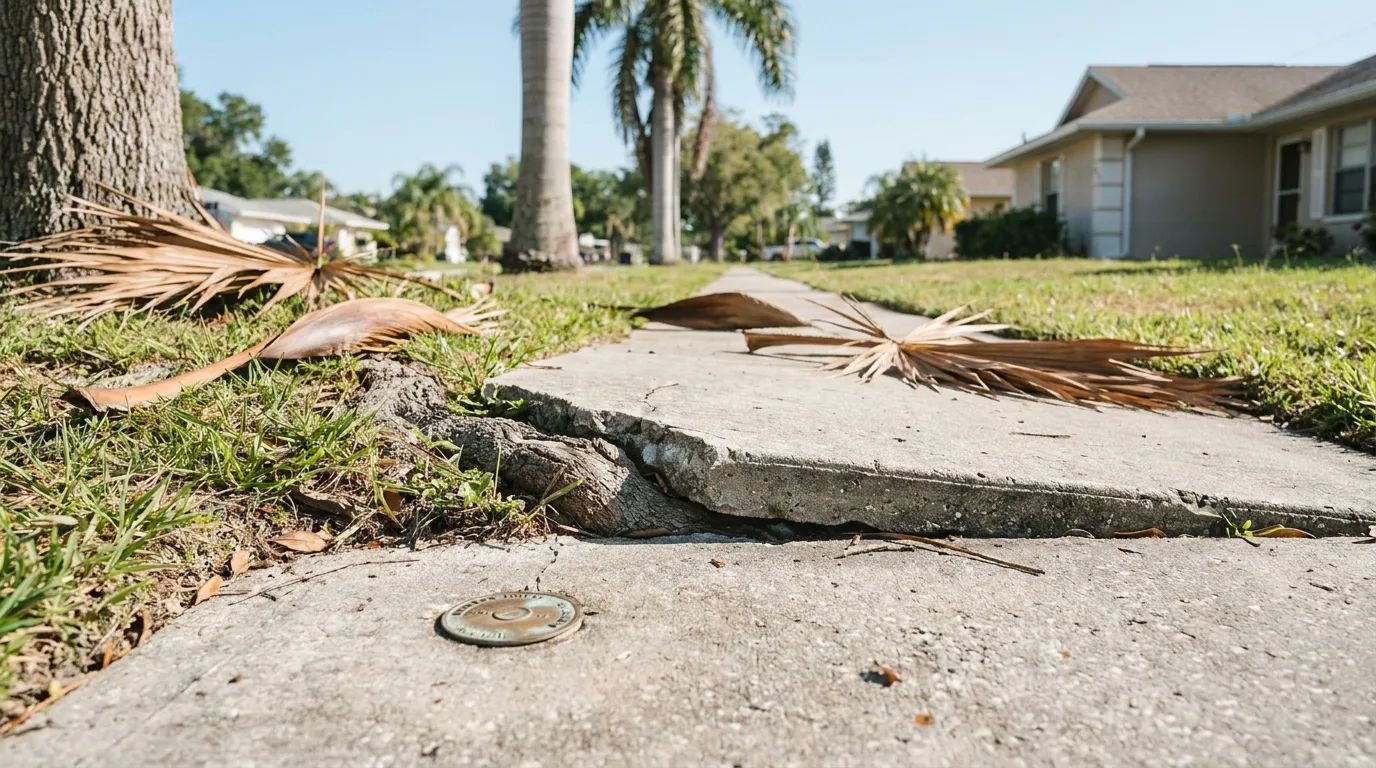
A city sidewalk trip and fall Florida claim generally allows one injured person to recover no more than $200,000 from a city or other government entity. Under Florida Statutes § 768.28(5), a city’s total payout for all claims from the same incident is capped at $300,000 combined. A jury may still award more, but the city generally pays the excess only if the Legislature passes a special "claims bill" or agrees to settle within its insurance coverage. If you were hurt on a broken or uneven sidewalk in Hollywood, knowing these limits early can help protect your claim.
Claims against a city come with notice requirements that private injury claims generally do not have. Salpeter Gitkin, LLP helps injured people in Hollywood and across South Florida understand their options after a fall on public property. Call 954-467-8622 or contact us now to talk through what happened.
Why You Can Sue a City at All
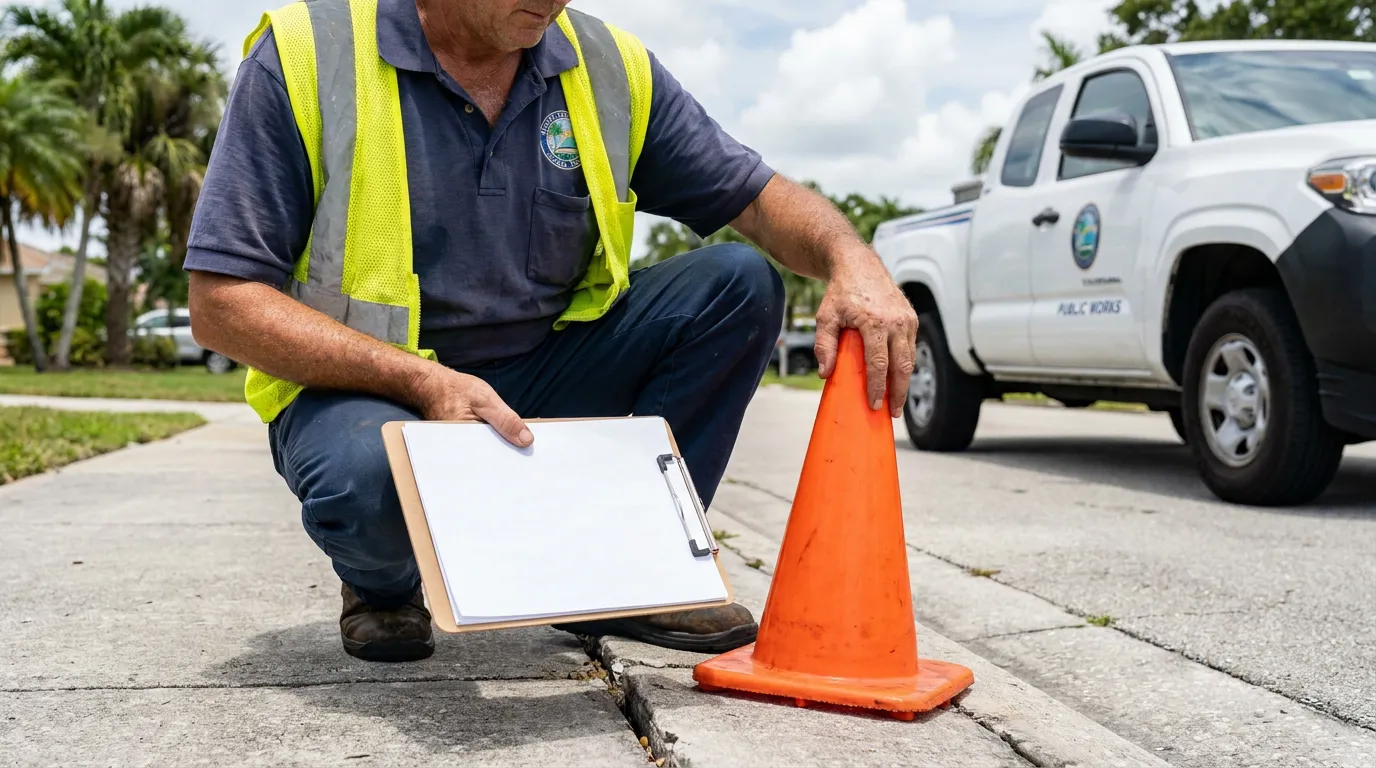
Florida has partially waived sovereign immunity, the old doctrine that shielded governments from lawsuits. Section 768.28(5)(a), Florida Statutes, provides that "the state and its agencies and subdivisions shall be liable for tort claims in the same manner and to the same extent as a private individual under like circumstances." Cities like Hollywood count as subdivisions of the state, so a city may be held responsible when its negligence, such as failing to repair a known sidewalk hazard, causes an injury.
The waiver has limits and works in both directions. It generally covers negligent operational acts, such as maintaining an existing sidewalk, but not discretionary, planning-level decisions like sidewalk design or budgeting. Florida Statutes § 768.14 also allows a defendant sued by the state or a subdivision to counterclaim for damages resulting from the same transaction or occurrence. The University of Miami Law Review has published scholarly analysis of Florida’s waiver tracing how the Legislature balanced court access against protecting public funds.
Proving the City Was Negligent
A waiver of immunity only opens the door. You still generally have to prove the basic elements of negligence: duty, breach, causation, and damages. In a sidewalk case, that often means showing the city was responsible for maintaining the sidewalk, knew or should have known about the dangerous condition and failed to fix or warn about it in reasonable time, and that failure caused your injuries.
Private businesses are held to a related standard. Under Florida Statutes § 768.0755, a person who slips on a transitory foreign substance in a business must prove the business had actual or constructive knowledge of the hazard and should have fixed it. That statute doesn’t govern sidewalk defect claims against a city, which follow general negligence principles and § 768.28. Still, evidence that the hazard was obvious or long-standing can matter in both kinds of cases.
How the Florida Sovereign Immunity Cap Works
Section 768.28(5), Florida Statutes, sets the core damages limits for claims against government entities. Under the statute, neither the state nor its agencies or subdivisions will pay a claim or judgment by any one person exceeding $200,000. The statute also bars payment of claims that, "when totaled with all other claims or judgments paid… arising out of the same incident or occurrence, exceeds the sum of $300,000." The full text appears in Chapter 768 of the Florida Statutes. A 2026 bill that would have raised these caps was vetoed, so the $200,000 and $300,000 limits remain in effect.
The statute also excludes certain damages outright. Government liability does not include punitive damages or pre-judgment interest. Compensatory damages, such as medical bills, lost wages, and pain and suffering, may still be recoverable up to the caps.
| Limit Type | Amount | What It Means |
|---|---|---|
| Per-person cap | $200,000 | Maximum one injured person can generally collect |
| Per-incident cap | $300,000 | Maximum total for all claimants from one incident |
| Punitive damages | Not available | Excluded by § 768.28(5) |
| Pre-judgment interest | Not available | Excluded by § 768.28(5) |
What the $300,000 Per Incident Cap Means for Multiple Victims
When several people are hurt in the same event, they generally share the $300,000 per incident cap. Picture a section of sidewalk collapsing and injuring three pedestrians at once. Even if each person’s injuries are serious, the city’s combined payout generally cannot exceed $300,000, and no single person can receive more than $200,000 of it.
This can create hard choices when injuries are severe. Claims may need to be coordinated, and settlement timing can affect what remains for others. An attorney can help evaluate how the cap may apply when more than one person is involved.
Getting More Than the $200,000 Cap
A court or jury may enter a judgment larger than the statutory limits. Under § 768.28(5), the portion above $200,000 or $300,000 "may be reported to the Legislature, but may be paid in part or in whole only by further act of the Legislature." In practice, unless the city agrees to settle within its insurance coverage, this generally means pursuing a claims bill.
A claims bill is special legislation authorizing payment to a specific injured person. The process can be lengthy and political, and passage is not assured, lawmakers may reduce the amount or decline to act at all.
Does City Insurance Raise the Limit?
Having insurance generally does not, by itself, raise a city’s liability limits. Section 768.28(5) allows a government entity to agree to settle within the limits of its insurance coverage without further legislative action, but buying insurance above the caps does not waive sovereign immunity or increase liability limits. Any recovery beyond the caps through insurance generally depends on the city agreeing to settle.
💡 Pro Tip: Ask early whether the city carries excess insurance coverage. That information may affect settlement discussions, although the city is not required to pay beyond the caps unless it agrees to or the Legislature acts.
Key Deadlines for a City Sidewalk Trip and Fall Florida Claim
Claims against government entities generally follow deadlines that differ from ordinary negligence claims. For a typical claim against a private property owner, Florida Statutes § 95.11(5)(a) generally requires filing within two years. Negligence claims against the state or its subdivisions under § 768.28(14) generally must be filed within four years after the claim accrues.
The longer lawsuit deadline does not mean you can wait. Section 768.28(6)(a) requires written notice to the city generally within three years after the claim accrues, and before you file suit. For claims against the state or its agencies, notice to the Florida Department of Financial Services is also required; however, for claims against a municipality such as a city, only written notice to the city itself is required. The city then generally has up to six months to investigate; if it doesn’t decide within that time, the claim is treated as denied. This pre-suit notice step is separate from the lawsuit itself, and missing it may bar your case. Exceptions to filing deadlines are interpreted narrowly and should not be assumed to apply.
Steps that may help protect a Hollywood FL sidewalk fall claim include:
- Photographing the sidewalk defect, including a measuring reference if possible
- Getting names and contact information for any witnesses
- Seeking prompt medical care and keeping all records and bills
- Keeping the shoes and clothing you wore during the fall
- Writing down the exact location, time, and lighting conditions
How Shared Fault Can Reduce Your Recovery
Florida’s comparative negligence rule may reduce what you recover if you are found partly at fault. Under Florida Statutes § 768.81, as amended in 2023, your damages may be reduced by your percentage of fault, and you generally cannot recover anything if found more than 50% at fault. A city may argue you were distracted or should have seen the defect.
Fault reductions are generally applied to the damages award first, and the statutory caps still limit what can be collected. Because outcomes depend on specific facts, documenting the sidewalk’s condition is especially important. Understanding when premises claims exceed limits may also help you think about how your case could be valued.
💡 Pro Tip: Avoid posting about your fall or recovery on social media. Insurers and defense counsel may review public posts for statements that suggest shared fault.
Frequently Asked Questions
1. What is the most I can get from a Florida city for a sidewalk fall?
Under Florida Statutes § 768.28(5), one person can generally recover up to $200,000, and all claimants from one incident up to $300,000 combined. Amounts above those limits generally require a legislative claims bill or a settlement within the city’s insurance coverage.
2. Can I get punitive damages from the City of Hollywood?
No. Section 768.28(5) excludes punitive damages and pre-judgment interest from government tort liability.
3. How long do I have to file a sidewalk fall claim Florida cities must answer?
Section 768.28(14) generally allows four years to file a negligence suit. First, you generally must give written notice under § 768.28(6)(a) within three years. The city then has up to six months to investigate, so acting promptly matters.
4. What if I was partly responsible for my fall?
Under Florida Statutes § 768.81, your recovery may be reduced by your share of fault. It may be barred if you are found more than 50% at fault.
5. Does a jury verdict over $200,000 mean I get the full amount?
Not automatically. The excess may be reported to the Legislature, but it is generally payable only through a claims bill or a settlement within the city’s insurance coverage.
Protecting Your Right to City Injury Compensation in Florida
The municipal liability limits in § 768.28 shape almost every sidewalk injury claim against a Florida city. The $200,000 per-person and $300,000 per-incident caps, strict notice requirements, and comparative fault rules may all affect what you may recover. Acting early and preserving evidence may make a meaningful difference. A city sidewalk trip and fall Florida lawyer can help you work through these rules based on the facts of your case.
If you were hurt on a public sidewalk in Hollywood, you do not have to sort through the notice process alone. Salpeter Gitkin, LLP is ready to review your situation and explain your options. Call 954-467-8622 or reach out to our team today.
Disclaimer: This content is for informational purposes only and is not legal advice. Every case is unique, and results may vary. Consult an attorney about your specific circumstances.