
Does the Open and Obvious Defense Apply in Hollywood FL Cases?
If you were injured on someone else’s property in Hollywood, Florida, the property owner may claim the hazard was "open and obvious." This is one of the most common defenses used to deny or reduce compensation in premises liability claims throughout South Florida. Under Florida law, the open and obvious defense can affect whether a property owner owes you a duty of care, but it does not automatically bar your right to recover damages. Understanding how this defense works is critical for anyone pursuing a slip and fall or property injury claim in Hollywood, FL.
If you were hurt on someone else’s property and need guidance on your legal options, Salpeter Gitkin, LLP can help. Call 954-467-8622 or reach out to our team today to discuss your case.
What Is the Open and Obvious Defense Under Florida Law?
The open and obvious defense is a legal argument that a property owner should not be held liable for injuries caused by a hazard that was plainly visible or reasonably expected to be discovered by the injured person. Under Florida common law, property owners generally have no duty to warn of or protect against hazards that are open and obvious. Property owners and their insurance carriers frequently rely on this principle when contesting premises liability claims in Hollywood and throughout Broward County.
However, this defense is not a guaranteed shield against liability. Courts evaluate the specific facts of each case, and the nature, location, and circumstances of the hazard all play a role. A wet floor in a dimly lit grocery aisle, for instance, may not qualify as "open and obvious" even if the substance was technically visible.
💡 Pro Tip: After any injury on someone else’s property, photograph the hazard from multiple angles immediately. Time-stamped photos can counter a property owner’s claim that the danger was obvious, especially if lighting or obstructions made it harder to see.
How Florida Premises Liability Classifies Visitors
Florida premises liability law classifies people who enter a property into three categories: invitees, licensees, and trespassers. The duty of care a property owner owes depends on which category applies. Only invitees, such as customers in a store or guests at a hotel, receive the highest level of care. Under Post v. Lunney, 261 So. 2d 146 (Fla. 1972), property owners must maintain premises in a reasonably safe condition and correct or warn of dangers they knew or should have known about when the visitor did not or should not have known of them through reasonable care.
Licensees receive a lesser duty, and trespassers receive the least protection. Florida Statute §768.075 provides immunity from liability for injuries to trespassers in many situations. If you were lawfully on a property in Hollywood as a customer, employee, or invited guest, you generally fall under the invitee classification.
Why Your Visitor Status Matters to Your Claim
Your classification directly impacts how the open and obvious defense applies to your case. A property owner arguing this defense against an invitee faces a higher burden than when arguing against a trespasser.
| Visitor Classification | Duty of Care Owed | Open and Obvious Defense Impact |
|---|---|---|
| Invitee (customer, guest) | Highest: inspect, maintain, warn | Defense may reduce but not always eliminate liability |
| Licensee (social guest) | Moderate: warn of known dangers | Defense applies more broadly |
| Trespasser | Minimal: no willful harm | Defense generally bars most claims |
💡 Pro Tip: Keep any receipts, invitations, or records showing you were lawfully present on the property. Establishing invitee status strengthens your position against the open and obvious defense.
How a Premises Liability Attorney Hollywood Florida Relies On Can Challenge This Defense
An experienced premises liability attorney in Hollywood, Florida, knows that the open and obvious defense is not absolute and can be challenged on several grounds. Courts consider whether the property owner had superior knowledge of the risk, whether the hazard was unavoidable despite being visible, and whether the owner failed to take reasonable steps to address the condition.
Florida’s comparative negligence statute, §768.81, also plays a central role. Since 2023, Florida follows a modified comparative negligence system. A plaintiff who is more than 50 percent at fault is barred from recovering damages. If fault is 50 percent or less, the open and obvious nature of a hazard may reduce damages through fault apportionment rather than completely barring recovery. This means even if a court finds you bore some responsibility for not avoiding a visible hazard, you may still recover a portion of damages if your fault does not exceed 50 percent.
Proving the Property Owner Knew About the Hazard
One of the strongest ways to overcome the open and obvious defense is to show the property owner had actual or constructive knowledge of the dangerous condition. Under Florida Statute §768.0755, a claimant pursuing a premises liability claim involving a transitory foreign substance must demonstrate the business had actual or constructive knowledge of the hazardous condition. Evidence such as surveillance footage, maintenance logs, employee testimony, and prior incident reports can establish the owner knew about the danger and failed to act.
💡 Pro Tip: Request any incident report filed where you were injured. Businesses in Hollywood generally document reported injuries, and these records can reveal whether similar hazards existed before your accident.
Slip and Fall Claims and the Open and Obvious Hazard in Hollywood
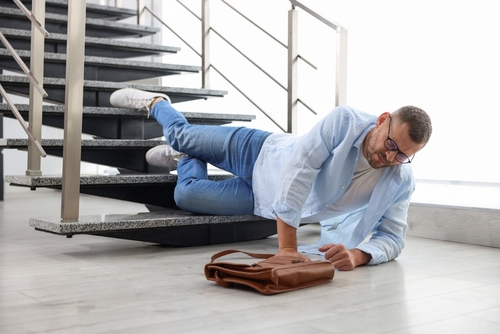
Slip and fall cases are among the most common Hollywood FL premises liability claims where the open and obvious defense arises. Property owners frequently argue that puddles, uneven sidewalks, or damaged flooring should have been apparent to a careful visitor. Yet many hazards are not as obvious as they seem. Poor lighting, visual distractions, crowded aisles, or the hazard blending into surrounding surfaces can all undermine the defense.
If you slipped and fell in a Hollywood store, restaurant, parking lot, or hotel, documenting the scene immediately is essential. Note whether warning signs, cones, or barriers were in place. Record witness names. Seek medical attention right away, even if injuries seem minor.
- Photograph the location, hazard, lighting conditions, and any lack of warning signs
- Obtain witness contact information
- Preserve the clothing and shoes you wore
- Request medical records linking your injuries to the fall
- Save correspondence with the property owner or their insurer
💡 Pro Tip: Do not give a recorded statement to the property owner’s insurance company without first consulting an attorney. Adjusters may use your words to argue you admitted the hazard was obvious.
The Role of Comparative Fault in Hollywood Property Injury Cases
Florida’s modified comparative fault system means your awareness of a hazard does not necessarily eliminate your right to compensation, but it can if your fault exceeds 50 percent. Under §768.81, as amended by HB 837 in 2023, the court or jury assigns a percentage of fault to each party. If you are more than 50 percent at fault, you are barred from recovering damages. If a jury determines you were 20 percent at fault and the property owner 80 percent at fault, your damages would be reduced by your share. This framework is particularly relevant in open and obvious hazard cases under Florida premises liability law.
Steps to Protect Your Hollywood FL Premises Liability Claim
Taking the right steps after a property injury in Hollywood can significantly impact your claim’s outcome. Evidence fades quickly, and delays in medical treatment allow insurance companies to argue your injuries were not caused by the incident.
Start by seeking medical care and creating a detailed record of your injuries and the conditions that caused them. Keep a journal documenting symptoms, limitations, and how the injury affects your daily life. Then consult a premises injury lawyer in Hollywood who understands how Florida courts evaluate these defenses. An attorney can investigate the scene, gather evidence, and build a case demonstrating the property owner’s negligence.
💡 Pro Tip: Florida imposes strict deadlines for filing personal injury claims. The statute of limitations for most negligence claims is two years from the date of injury for causes of action accruing after March 24, 2023. Missing this deadline could permanently bar your case.
Frequently Asked Questions
1. Can I still recover damages if the hazard was visible?
Yes, in many cases. Florida’s modified comparative fault system allows you to recover damages if you were partially at fault, as long as your fault does not exceed 50 percent. The open and obvious nature of a hazard may reduce your recovery but does not automatically eliminate your claim.
2. What does "constructive knowledge" mean in a slip and fall case?
Constructive knowledge means the property owner should have known about the hazard through reasonable inspection. Under §768.0755, if a dangerous condition existed long enough that a reasonable property owner would have discovered and corrected it, the business may be deemed to have had constructive knowledge.
3. Does the open and obvious defense apply to crime-related injuries on property?
Florida courts have addressed this issue. The Third District Court of Appeal held in Barrio v. City of Miami Beach, 698 So. 2d 1241 (Fla. 3d DCA 1997), that the danger of crime may be considered an open and obvious danger for uninvited persons. However, outcomes vary depending on visitor classification and specific facts, so consulting a premises liability attorney is important.
4. How long do I have to file a premises liability claim in Hollywood, Florida?
For most negligence claims, including premises liability cases, the statute of limitations is two years from the date of injury under changes enacted by HB 837 in 2023. The applicable time period can vary depending on claim type and circumstances. Consult an attorney promptly.
5. What evidence helps defeat the open and obvious defense?
Strong evidence includes photographs, surveillance video, maintenance records, witness statements, and prior incident reports. Demonstrating the property owner had knowledge of the hazard and failed to act, or that conditions made the hazard difficult to detect, can weaken the defense. Medical records linking injuries to the incident are also essential, as outlined in general premises liability principles.
Protecting Your Rights After a Property Injury in Hollywood
The open and obvious defense is a common but far from insurmountable obstacle in Hollywood, Florida premises liability cases. Florida law provides multiple avenues for injured visitors to pursue compensation, from comparative fault apportionment to proving the property owner’s knowledge of the hazard. The strength of your evidence can determine whether this defense succeeds or fails.
If you suffered an injury on someone else’s property in Hollywood or anywhere in South Florida, Salpeter Gitkin, LLP is ready to review your case. Call 954-467-8622 or contact us now to schedule a consultation.