Understanding Your Rights After a Floor Hazard Injury in Tallahassee
Key Takeaways: To prove a Tallahassee Walmart knew about a floor hazard, you must show the store had actual or constructive knowledge of the dangerous condition under Florida Statute § 768.0755. Actual knowledge means an employee directly knew about the spill, while constructive knowledge is inferred from circumstances, either the hazard existed long enough to be discovered through ordinary care, or the condition recurred regularly enough to be foreseeable. Physical clues like dried liquid, footprints, surveillance footage, inspection logs, and witness accounts help prove these theories. Florida’s statute preserves common-law duties of care. Acting quickly to preserve evidence and seek medical care is essential.
If you were injured at Walmart Florida shoppers often ask: how do you prove the store knew about the spill, puddle, or slick floor that caused your fall? Under Florida law, a customer injured at a Tallahassee Walmart due to a floor hazard must prove Walmart had actual or constructive knowledge of the dangerous condition and failed to remedy it. This article explains how that proof works and what evidence may strengthen your claim.
The team at Salpeter Gitkin, LLP is ready to listen. Call us at (866) 203-2911 or reach out through our confidential case review page to discuss your options.
💡 Pro Tip: The moment you can do so safely, photograph the hazard, your injuries, and the surrounding area from multiple angles. Conditions get cleaned up fast, and early images can become some of the most persuasive evidence later.
The Legal Burden Behind Every Tallahassee Slip and Fall Claim
The foundation of any retail floor-hazard case is the knowledge requirement set by statute. A person who slips and falls on a transitory foreign substance in a business establishment must prove the business had actual or constructive knowledge of the dangerous condition and should have taken action to remedy it. This standard, codified in Florida Statute § 768.0755(1), is the threshold every Tallahassee slip and fall claim must clear. You can review the controlling language within Florida Statutes Chapter 768.
Actual knowledge and constructive knowledge are two distinct paths to the same destination. Actual knowledge means a Walmart employee or manager was directly aware of the hazard, perhaps because a worker saw the spill or a customer reported it. Constructive knowledge is inferred from circumstances when no one admits to seeing the danger. Because direct admissions are rare, most cases turn on constructive knowledge analysis.
How Constructive Knowledge Builds Your Case
Constructive knowledge gives injured shoppers a realistic route to proving fault without a confession from the store. Constructive knowledge can be proven two ways: the dangerous condition existed long enough that a reasonably careful business should have discovered it, or the hazardous condition happened so regularly that it was foreseeable.
The Length-of-Time Theory
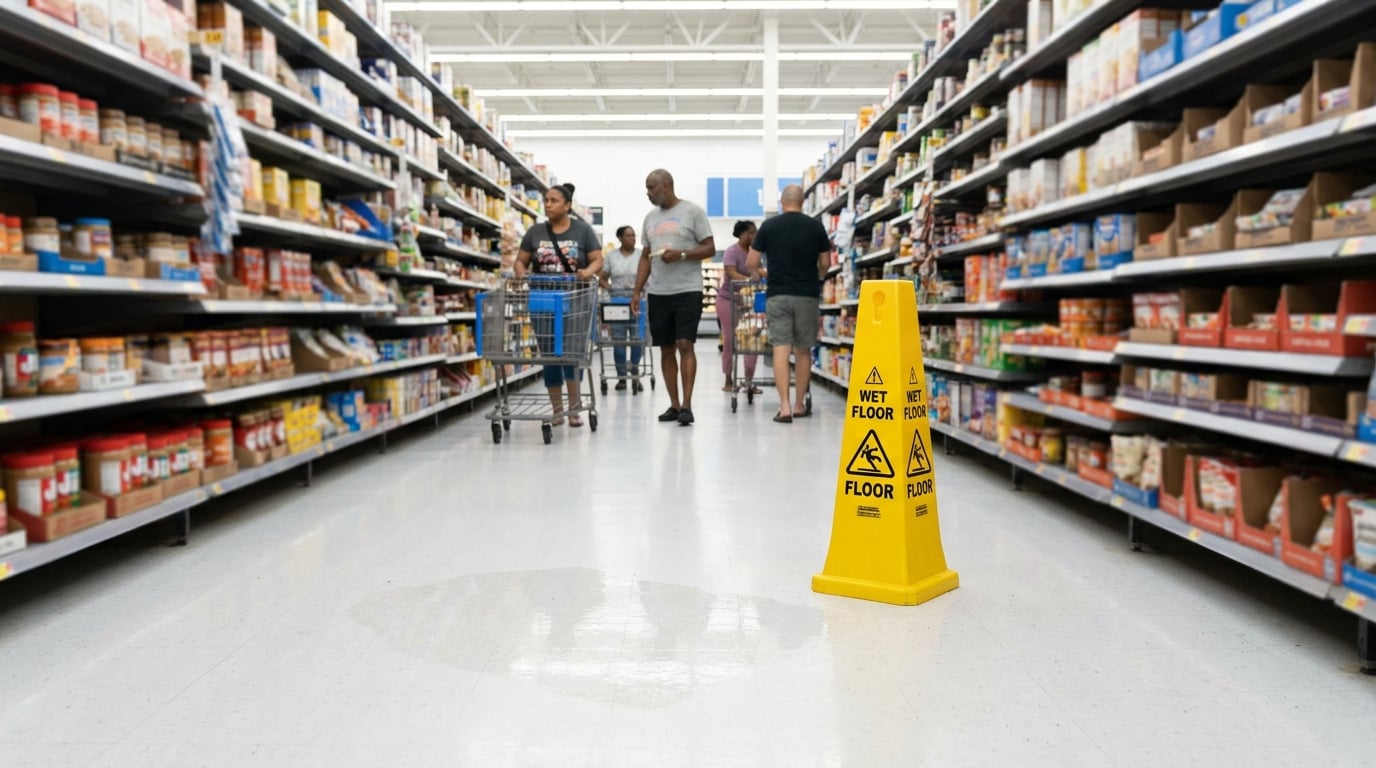
The first branch focuses on how long the hazard sat before your fall. Constructive knowledge can be established by showing the hazard existed long enough that the business should have discovered it through ordinary care. Section 768.0755(1)(a) frames this as whether the dangerous condition existed for such a length of time that, in the exercise of ordinary care, the business should have known of the condition. Evidence such as dried or tracked-through liquid, dirt in a puddle, or cart marks running through a spill can suggest the hazard lingered. Florida courts apply a reasonableness standard, and a store may have a defense if evidence shows the hazard appeared moments before the fall.
The Regularity and Foreseeability Theory
The second branch examines whether the same kind of hazard keeps happening. Section 768.0755(1)(b) recognizes a hazard that occurred with regularity and was therefore foreseeable. A leaking freezer case, a produce aisle that repeatedly drips, or an entrance that floods during rain can support this theory.
💡 Pro Tip: Ask whether the store keeps inspection logs or "sweep sheets." These internal records can reveal how often an area was checked and whether the store missed its own schedule before your fall.
Building Slip and Fall Evidence That Holds Up
Strong slip and fall evidence usually combines physical proof, documentation, and witness accounts. Because the knowledge element is central, the most valuable materials show what the hazard looked like and how long it was present. Preserving this proof quickly is often the difference between a provable claim and a contested one.
Consider gathering:
- Photos and video of the hazard, your injuries, warning signs (or their absence), and nearby aisles.
- Surveillance footage requests sent early, since retailers may overwrite recordings within days or weeks.
- Witness names and contact details from anyone who saw the spill or your fall.
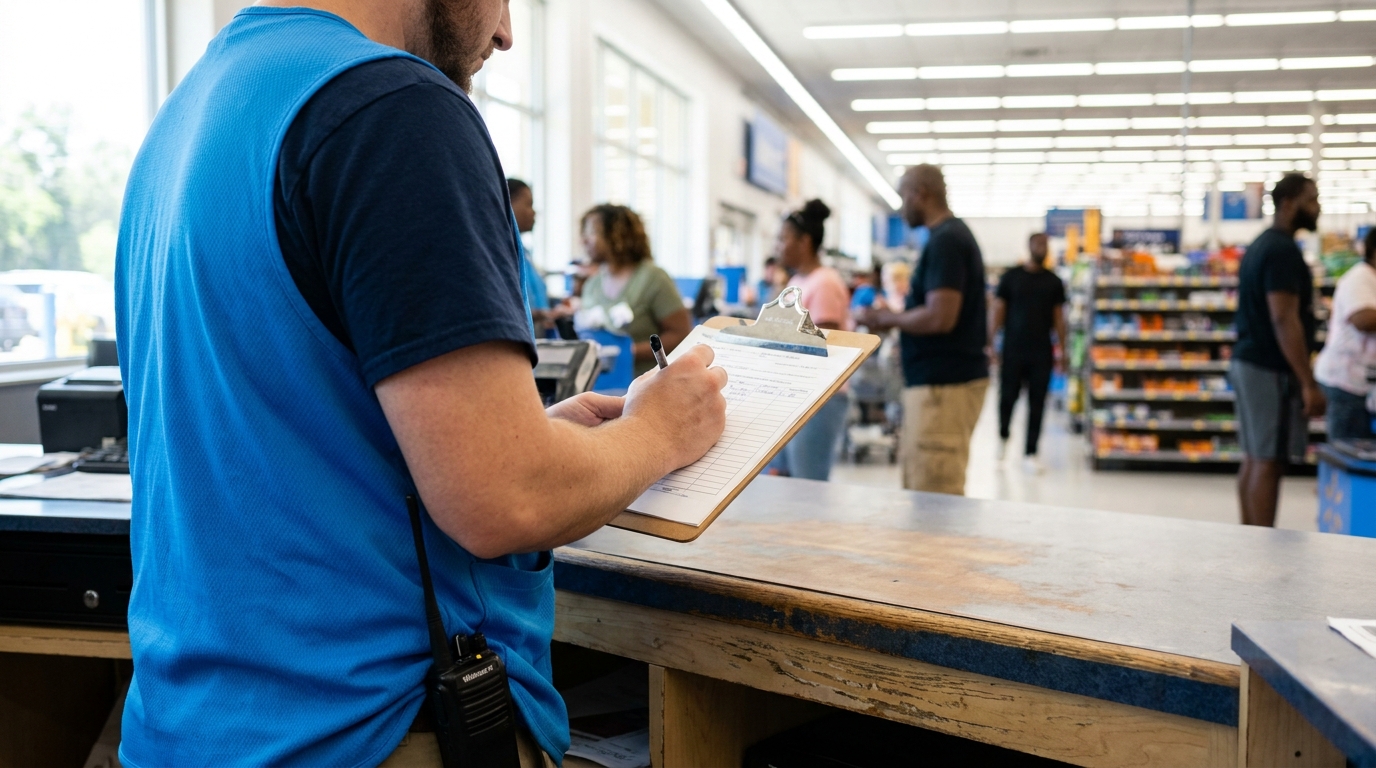
- Incident report copies if a manager documented the event.
- Medical records connecting your injuries directly to the fall.
Securing prompt medical care protects both your health and your claim. A documented gap between your fall and treatment can give an insurer room to argue your injuries came from something else. Seeking care quickly creates a clear record that ties the hazard to your harm. Our overview of the elements of a successful claim walks through duty, breach, causation, and damages.
💡 Pro Tip: Send a written preservation letter requesting that the store retain video and incident reports. Once a retailer is on notice, destroying that evidence can carry consequences in litigation.
Why Common-Law Duties Still Matter in a Walmart Floor Hazard Case
The statute is not the only source of a store’s obligations to keep its floors safe. Florida § 768.0755 does not eliminate common-law duties owed by business owners. In a Tallahassee Walmart premises liability claim, injured shoppers may still invoke general common-law negligence principles in addition to the statutory framework.
This preservation clause can open additional legal theories depending on the facts. Section 768.0755(2) states that this section does not affect any common-law duty of care owed by a person or entity in possession or control of business premises. While this subsection preserves common-law duties, Florida courts have generally held that the statute’s actual-or-constructive-knowledge requirement still governs proof in transitory-substance slip-and-fall cases. Whether added theories apply depends on your specific circumstances, so guidance from a firm respected for handling premises liability Tallahassee Florida matters.
What Being Injured at Walmart Florida Typically Looks Like
Being injured at Walmart Florida shoppers commonly describe a sudden fall in a high-traffic zone. Entrances during rain, beverage and freezer aisles, produce sections, and recently mopped floors are frequent trouble spots. The constructive knowledge Florida standard becomes especially relevant in these areas because recurring or lingering hazards are easier to tie to foreseeability.
Below is a simplified comparison of the two ways constructive knowledge may be shown under Florida 768.0755:
| Theory | What You Show | Helpful Evidence |
|---|---|---|
| Length of time | The hazard sat long enough to be discovered | Dried liquid, footprints, cart tracks, inspection gaps |
| Regularity | The same hazard recurs and was foreseeable | Repeat leaks, prior complaints, maintenance history |
It is important to set realistic expectations about how these cases unfold. Outcomes depend on the specific facts, the strength of evidence, and how quickly proof was preserved.
💡 Pro Tip: Florida follows a modified comparative negligence system. For negligence actions accruing on or after March 24, 2023, a claimant found more than 50% at fault is barred from recovering damages, and a recovery of 50% or less is reduced by the assigned percentage. Insurers have a strong incentive to argue you share blame, so sticking to documented facts when describing your fall helps protect your position.
Important Timing Considerations
Civil deadlines for filing a lawsuit are separate from anything the store may tell you. Florida sets a statute of limitations for negligence claims, and missing it can bar recovery entirely. For negligence causes of action accruing on or after March 24, 2023, that deadline is generally two years from the date of injury (reduced from the prior four years under House Bill 837), though claims that arose before that date may still follow the older four-year period.
Acting early also preserves the proof your case may depend on. Because surveillance video and internal records can disappear quickly, delay can quietly weaken even a strong claim. The statutory framework appears in the official Florida premises liability statute text maintained by the Legislature.
Frequently Asked Questions
1. Do I have to prove Walmart was directly told about the spill?
No. Florida Statute § 768.0755 allows you to rely on constructive knowledge, which is shown through circumstantial evidence. You may demonstrate that the hazard existed long enough to be discovered or that it recurred regularly enough to be foreseeable.
2. What is the difference between actual and constructive knowledge?
Actual knowledge means a Walmart employee genuinely knew about the hazard. Constructive knowledge means the store should have known through ordinary care. Most cases focus on constructive knowledge because direct proof is uncommon.
3. What evidence helps prove how long a hazard was present?
Physical clues like dried liquid, dirt in a puddle, footprints, and cart tracks can suggest the spill sat for some time. Surveillance footage and inspection logs may also show how long the area went unchecked.
4. Can I still sue if the statute seems to limit my claim?
Possibly. Section 768.0755(2) preserves common-law duties of care, so additional negligence theories may apply. The statute’s actual-or-constructive-knowledge requirement still governs how you prove a transitory-substance case.
5. How quickly should I act after a fall?
As soon as possible. Evidence such as video and incident reports can be lost within days, and civil filing deadlines apply, generally two years for negligence claims accruing on or after March 24, 2023. Prompt action protects both your proof and your legal options.
Moving Forward After a Tallahassee Floor-Hazard Injury
Proving that a Tallahassee Walmart knew about a floor hazard comes down to the knowledge element at the heart of Florida 768.0755. Whether you establish actual knowledge or rely on the length-of-time or regularity branches of constructive knowledge, the strength of your claim depends on preserved evidence, prompt medical care, and an accurate understanding of the statute and common-law duties.
If you were hurt by a dangerous condition at a retail store, the attorneys at Salpeter Gitkin, LLP are here to help you understand your rights. Call (866) 203-2911 or request a confidential consultation through our secure contact form to take the next step today.