Understanding Who Holds Authority Over a Cruise Ship Assault Near Hollywood, FL
Key Takeaways: An onboard assault on a cruise ship departing from or near Hollywood, FL is primarily investigated under federal maritime law, with the FBI and U.S. Coast Guard leading investigations under Title 46 of the U.S. Code. Federal rules require cruise lines to maintain surveillance and report crimes, making that footage critical evidence that victims should preserve immediately. Florida law plays a supporting role, defining offenses like assault, battery, and sexual battery when conduct touches state territorial waters. Florida classifies vessels as "dangerous instrumentalities," requiring operators to exercise the highest degree of care and providing civil tools such as vessel attachment. Cruise ticket contracts often impose short notice and filing deadlines enforced under maritime law, requiring victims to act far sooner than typical Florida personal injury timelines. Acting quickly to report, seek medical care, document evidence, and review your ticket contract protects your claim.
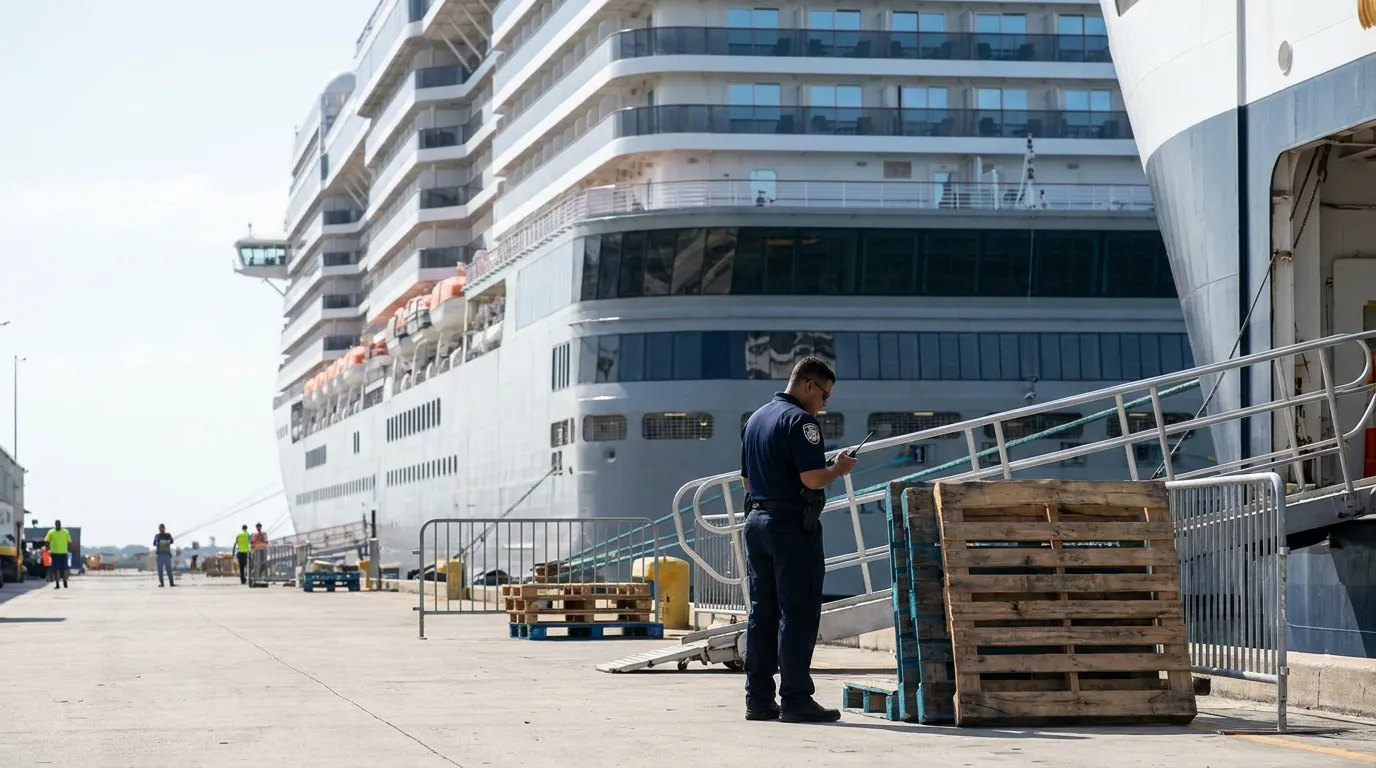
An onboard assault on a cruise ship departing from or near Hollywood, Florida is primarily investigated under federal maritime law, not your local Hollywood police department. Because cruise vessels move through navigable waters and international ports, jurisdiction usually shifts to federal authorities, with Florida law playing a supporting role. Understanding which agency takes the lead helps victims protect evidence and preserve their rights immediately after an incident.
If you or a loved one suffered an onboard assault, the team at Salpeter Gitkin, LLP is ready to help. Call us at (954) 467-8622 or reach out through our confidential contact form to discuss protecting your claim.
Why Federal Maritime Law Usually Controls the Investigation
Federal law sets the baseline for crimes aboard passenger vessels operating in U.S. ports. Because cruise ships are moving, multi-jurisdictional environments, Congress established uniform safety and reporting rules applying regardless of which port the ship recently visited. Federal statutes mandate security, video surveillance, and crime-reporting requirements for passenger vessels embarking or disembarking in the United States. These passenger vessel security requirements require operators to maintain surveillance systems designed to document onboard crimes.
Video surveillance often becomes critical evidence. Under 46 U.S.C. § 3507, cruise lines must maintain video monitoring to assist in documenting crimes and supporting prosecution. The FBI and U.S. Coast Guard frequently lead criminal investigations of cruise assaults. For a deeper explanation of how these rules operate locally, our overview of maritime law in Hollywood, FL breaks down the framework.
💡 Pro Tip: Request that the cruise line preserve all surveillance footage in writing immediately. Footage can be overwritten on a schedule, and a documented preservation request may help protect a cruise passenger assault claim.
When Florida Law and State Investigators Can Still Play a Role
Florida law can apply when conduct touches the state’s territorial waters or when the vessel is within Florida jurisdiction. While federal authorities generally lead, Florida statutes define underlying offenses that may apply if a matter falls under state jurisdiction. Under Florida law, assault is an intentional threat by word or act to do violence to another, paired with the apparent ability to do so, creating a well-founded fear of imminent violence in the victim.
Florida grades these offenses by severity. Simple assault is a second-degree misdemeanor, while battery is treated more seriously. Florida law defines battery as intentionally touching or striking another person against their will, or intentionally causing bodily harm. Simple battery is a first-degree misdemeanor, while a prior battery conviction elevates a subsequent offense to a third-degree felony.
More serious sexual offenses carry their own statutory framework and far steeper penalties. Florida defines sexual battery under state law, establishing the substantive offense for an onboard assault prosecuted under Florida jurisdiction. The statute sets a strict consent standard, defining consent as intelligent, knowing, and voluntary, and clarifies that a victim’s failure to physically resist does not constitute consent. The statute also defines "mentally incapacitated" to include victims temporarily incapable of controlling their conduct due to intoxicating substances administered without their consent. Penalties scale with the ages of the accused and victim and the presence of aggravating factors such as force or weapon use, ranging up to life felonies.
| Offense Under Florida Law | General Classification |
|---|---|
| Simple assault | Second-degree misdemeanor |
| Simple battery | First-degree misdemeanor |
| Battery (prior conviction) | Third-degree felony |
| Sexual battery | Felony, up to life felony with aggravators |
Classifications above are general and depend on the specific facts and applicable jurisdiction.
How Florida Boating and Vessel Statutes Shape Civil Claims
Beyond criminal investigation, Florida law gives victims civil tools to pursue accountability. When negligence in operating a vessel contributes to harm, Florida provides a path to seek recovery and even secure the vessel itself. Under Florida law, a person injured through negligence in the navigation, direction, or management of a ship within Florida’s territorial jurisdiction may seek attachment of the vessel as part of a civil action for damages. Venue may be in the county where the injury occurred, which could include Broward County for Hollywood departures, or where the vessel is found.
Florida holds vessel operators to an unusually high standard of care. Florida law classifies all vessels as "dangerous instrumentalities," requiring operators to exercise the "highest degree of care" to prevent injuries during the vessel’s use. This elevated standard may support a cruise ship assault claim where the cruise line failed to provide adequate security or supervision to protect passengers from foreseeable onboard violence. Because federal maritime law generally holds cruise lines to a standard of reasonable care under the circumstances, whether Florida’s higher standard applies depends on the governing law and specific facts. The Florida statutes governing vessel operator duty of care state this demanding rule.
State investigators also retain authority in connection with certain on-water incidents. Florida law enforcement officers investigating a boating collision, accident, or related casualty have express statutory authority to arrest or cite an operator when probable cause exists that an offense was committed in connection with the incident. In limited circumstances, Florida courts may authorize disclosure of otherwise protected records when the crime is extremely serious, including sexual assault or crimes causing serious bodily injury, and when the records are likely to provide substantial investigative value.
💡 Pro Tip: Keep a written timeline of the incident, including names of crew members, security officers, and witnesses. Memory fades, and detailed notes often strengthen a maritime crime claim near Hollywood, FL.
Protecting Your Cruise Ship Injury Claims After an Assault
Acting quickly is one of the most important things a victim can do to protect cruise ship injury claims. Evidence aboard a moving vessel can disappear, and cruise tickets often contain strict contractual deadlines and forum-selection clauses.
Consider these practical steps after an onboard assault:
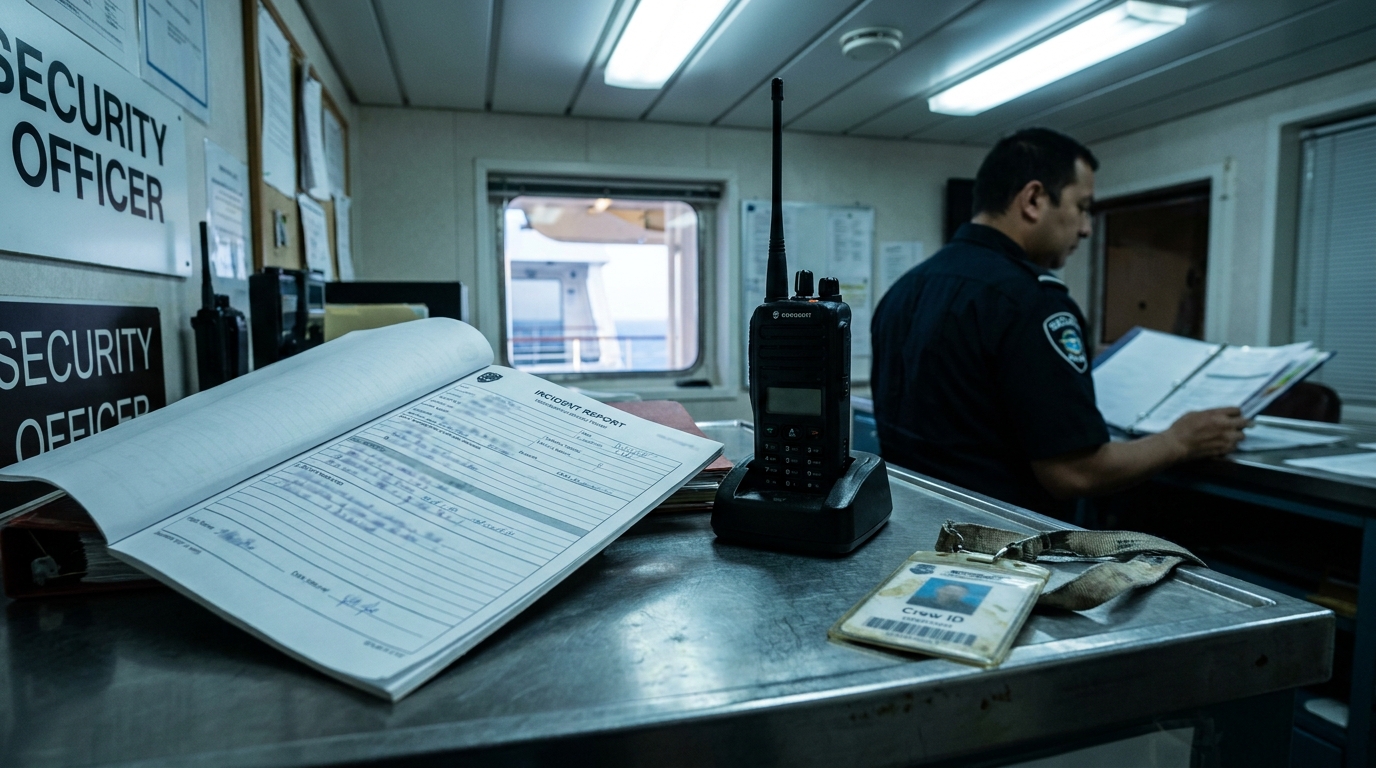
- Report the incident to ship security and request a written incident report.
- Seek prompt medical care and keep copies of all records.
- Photograph injuries and the assault location.
- Identify witnesses and collect their contact information before the cruise ends.
- Review your cruise ticket contract for notice requirements and filing deadlines.
Cruise ticket contracts frequently shorten the time you have to act. Many tickets require written notice within a set period and lawsuits filed in a specific forum. These contractual limits are separate from any criminal investigation and often apply even when a federal agency is still reviewing the matter. Because these provisions are generally enforced under maritime law, victims may be required to act far sooner than under typical Florida personal injury timelines.
💡 Pro Tip: Do not assume that a pending criminal investigation pauses your civil deadlines. Civil filing periods and contractual notice provisions generally run on their own schedule, subject to limited exceptions that courts apply narrowly.
Establishing cruise line liability often turns on foreseeability and adequate security. A plaintiff generally must show that the cruise line owed a duty, breached it, and caused compensable harm. Whether the line met its duty depends on the specific facts, including prior incidents, staffing, and surveillance. Our dedicated page on cruise ship accidents Hollywood Florida explains how these claims are evaluated and pursued.
Frequently Asked Questions
-
Who investigates a sexual assault that happens on a cruise ship?
Federal authorities typically take the lead in serious onboard assault cases. The FBI and U.S. Coast Guard generally handle these matters under federal maritime law, supported by the cruise line’s mandatory reporting and surveillance obligations. Florida authorities may become involved when conduct falls within state territorial jurisdiction.
-
Can I file a civil claim if a criminal investigation is ongoing?
Yes, a civil claim is generally separate from a criminal investigation. A criminal case seeks to punish an offender, while a civil cruise passenger assault claim seeks compensation for your losses. These processes proceed independently, though evidence from one may support the other.
-
Does Florida law apply to my onboard assault?
It depends on where the conduct occurred and the vessel’s location. Federal maritime law usually controls, but Florida statutes may apply when the incident touches state territorial waters or when the vessel is found within Florida jurisdiction.
-
How quickly do I need to act after a cruise ship assault?
Often much sooner than you might expect. Cruise ticket contracts frequently impose short notice and filing deadlines enforced under maritime law. Reviewing your ticket and seeking guidance promptly is important.
-
What evidence matters most in a cruise assault claim?
Surveillance footage, incident reports, medical records, and witness information are often central. Because footage may be overwritten and witnesses disperse after the cruise, preserving evidence early can be critical to a cruise injury claim.
Moving Forward With Confidence After an Onboard Assault
Determining who investigates an onboard assault near Hollywood, FL starts with recognizing that federal maritime law usually leads, with Florida statutes supplying important supporting authority. Federal rules govern surveillance and crime reporting, while Florida law defines offenses, classifies vessel operators as owing the highest degree of care, and offers civil remedies including vessel attachment, subject to federal admiralty law. Outcomes depend on the specific facts, the vessel’s location, and the terms of your cruise contract. Acting promptly to preserve evidence and understand your deadlines can make a meaningful difference.
If you are researching your rights after a cruise ship assault, the team at Salpeter Gitkin, LLP is ready to listen and guide you. Call (954) 467-8622 today or contact our office through our secure online intake page to take the next step toward protecting your claim.