Why Your Own Policy May Be the Best Protection After a Broward County Crash
Key Takeaways: With roughly one in five Florida drivers uninsured and state minimums requiring only $10,000 in PIP and property damage liability, at-fault drivers often cannot pay full damages. Uninsured motorist coverage under Fla. Stat. § 627.727 is included by default unless a named insured signs an office-approved written rejection, and it applies when the at-fault driver’s bodily injury limits fall short of your damages. Stacked UM allows limits to be combined across multiple vehicles for a single accident, preserved because § 627.4132 expressly excludes UM coverage. Non-stacked UM under § 627.727(8) requires filed rates reflecting at least a 20 percent premium reduction but ties recovery to the vehicle occupied. Because signed forms create conclusive presumptions and may carry forward on renewals, obtaining your complete certified policy file may matter more than the declarations page.
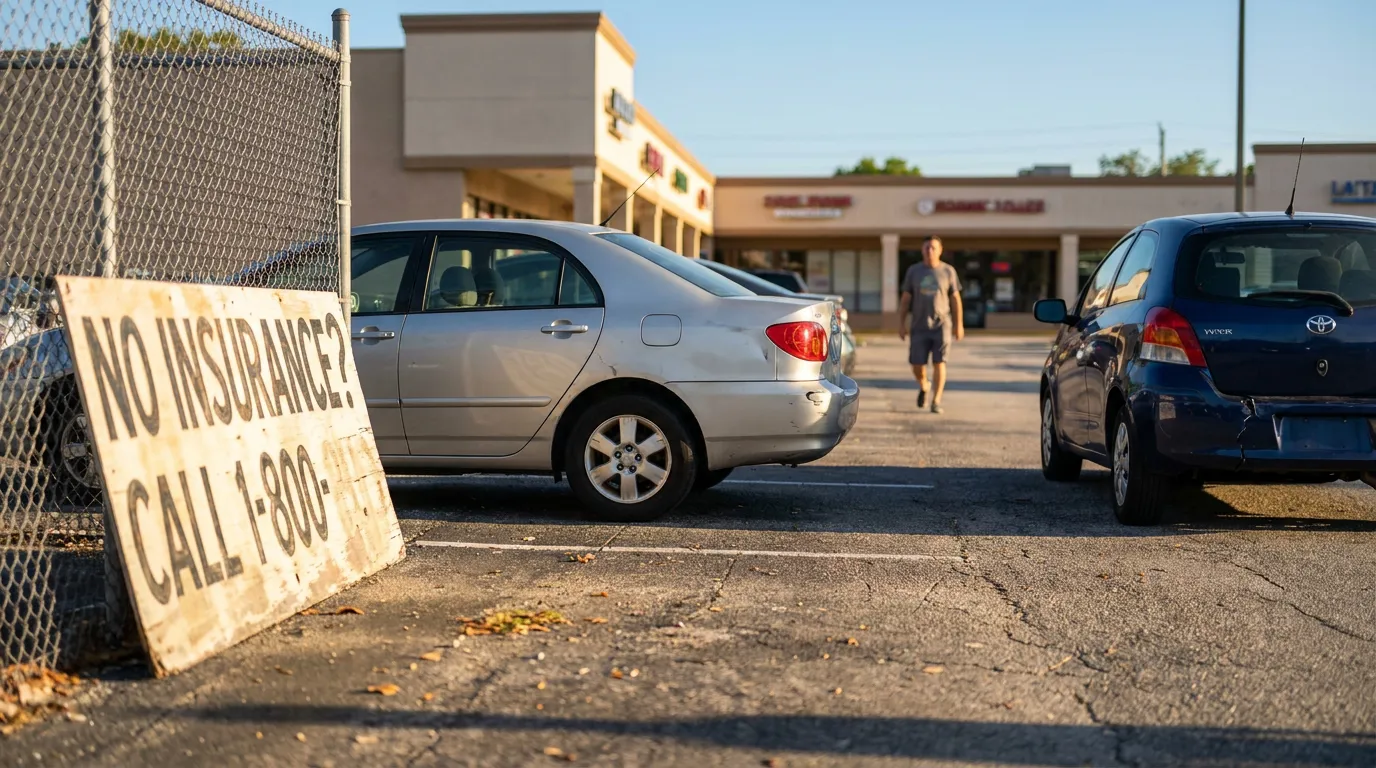
If an uninsured driver hits you in Hollywood, a lawsuit often leads nowhere. Roughly one in five Florida drivers carries no insurance, and state minimums leave wide gaps even when the at-fault driver has a policy. Uninsured motorist (UM) coverage on your own policy may fill that gap, and whether you chose stacked or unstacked UM can significantly change your recovery.
If you were injured by a driver with little or no insurance, the team at Salpeter Gitkin, LLP can review your policy declarations and any UM forms you signed. Call (954) 467-8622 or contact us now to discuss your options.
The Florida Insurance Gap Is Structural, Not Accidental
Florida’s minimum coverage requirements are unusually thin, which is why many crash victims discover their damages exceed what the at-fault driver can pay. According to the Insurance Research Council’s published uninsured motorist rate data, Florida vehicles must carry at least $10,000 in personal injury protection (PIP) and $10,000 in property damage liability (PDL). Notably absent is any bodily injury liability mandate for ordinary drivers.
That structural gap means even a fully "insured" at-fault driver may be functionally judgment-proof. A single surgery, ambulance ride, and weeks out of work can outpace $10,000 in PIP benefits quickly, particularly because PIP pays only 80 percent of reasonable medical expenses and 60 percent of lost wages. The injured person’s own UM coverage may be the only meaningful compensation source.
How Florida Law Builds UM Coverage Into Your Policy
Under Fla. Stat. § 627.727(1) (2025), no bodily injury liability auto policy may be issued in Florida unless uninsured motor vehicle coverage is provided in it or supplemental to it. Coverage becomes inapplicable only when a named insured or lessee makes a written rejection on behalf of all insureds under the policy. Florida drivers who purchase bodily injury liability coverage have UM by default until they affirmatively opt out.
Limits generally default upward. Fla. Stat. § 627.727(2) (2025) provides that UM limits shall be not less than the bodily injury liability limits purchased, unless the insured selects lower limits on an approved form.
UM Covers More Than Truly Uninsured Drivers
The statutory definition reaches underinsured motorists as well. Fla. Stat. § 627.727(3) (2025) treats a vehicle as "uninsured" where no bodily injury liability coverage applies, where the liability insurer is insolvent, or where the at-fault driver’s available bodily injury limits are less than total damages sustained. Underinsured claims typically require attention to the settlement-notice procedure in § 627.727(6), which gives the UM carrier 30 days to approve a tortfeasor settlement or preserve subrogation rights.
UM Is Additional Money, Not a Substitute
Florida law protects UM from being swallowed by other coverages. Section 627.727(1) states that UM shall be over and above, but shall not duplicate, other available benefits, that it shall cover the difference between those benefits and damages sustained, up to the maximum coverage amount, and that it "shall not be reduced by a setoff against any coverage, including liability insurance." UM generally does not duplicate PIP, workers’ compensation, or liability payments, but stands as additional recovery. An important exception exists: a policy lawfully issued under § 627.727(8) may include a setoff for amounts paid by or on behalf of the at-fault party.
Stacked vs Unstacked UM Coverage Florida Drivers Should Understand
Stacking means combining UM limits across multiple vehicles on one policy to create a larger potential recovery pool for a single accident. Florida generally prohibits stacking under Fla. Stat. § 627.4132, which limits an insured to the coverage on the vehicle involved in the accident. Critically, that section expressly does not apply to uninsured motorist coverage, which is separately governed by § 627.727.
Insurers may sell a cheaper non-stacked form. Under Fla. Stat. § 627.727(8)(a), coverage as to two or more motor vehicles "shall not be added together to determine the limit of insurance coverage available to an injured person for any one accident," except as provided in paragraph (c).
| Feature | Stacked UM | Non-Stacked UM |
|---|---|---|
| Limits across vehicles | May be combined for one accident | Generally cannot be added together |
| Which policy responds | Broader access across insured vehicles | Generally tied to the vehicle occupied, per § 627.727(8)(b) |
| Occupying a non-owned vehicle | Broader excess protection | Generally the highest single-vehicle limit, per § 627.727(8)(c) |
| Premium | Higher | Filed rates must reflect at least a 20% UM premium reduction under § 627.727(8) |
Occupancy Rules Decide How Much Money Is on the Table
Non-stacked UM may also dictate which policy responds. Fla. Stat. § 627.727(8)(b) provides that if the injured person is occupying a motor vehicle insured under the policy at the time of the accident, the UM coverage available is the coverage as to that motor vehicle. Under § 627.727(8)(c), a person occupying a non-owned vehicle may be entitled to the highest limits of UM afforded for any one vehicle as to which she or he is a named insured or insured family member.
The Forms You Signed Often Decide the Case
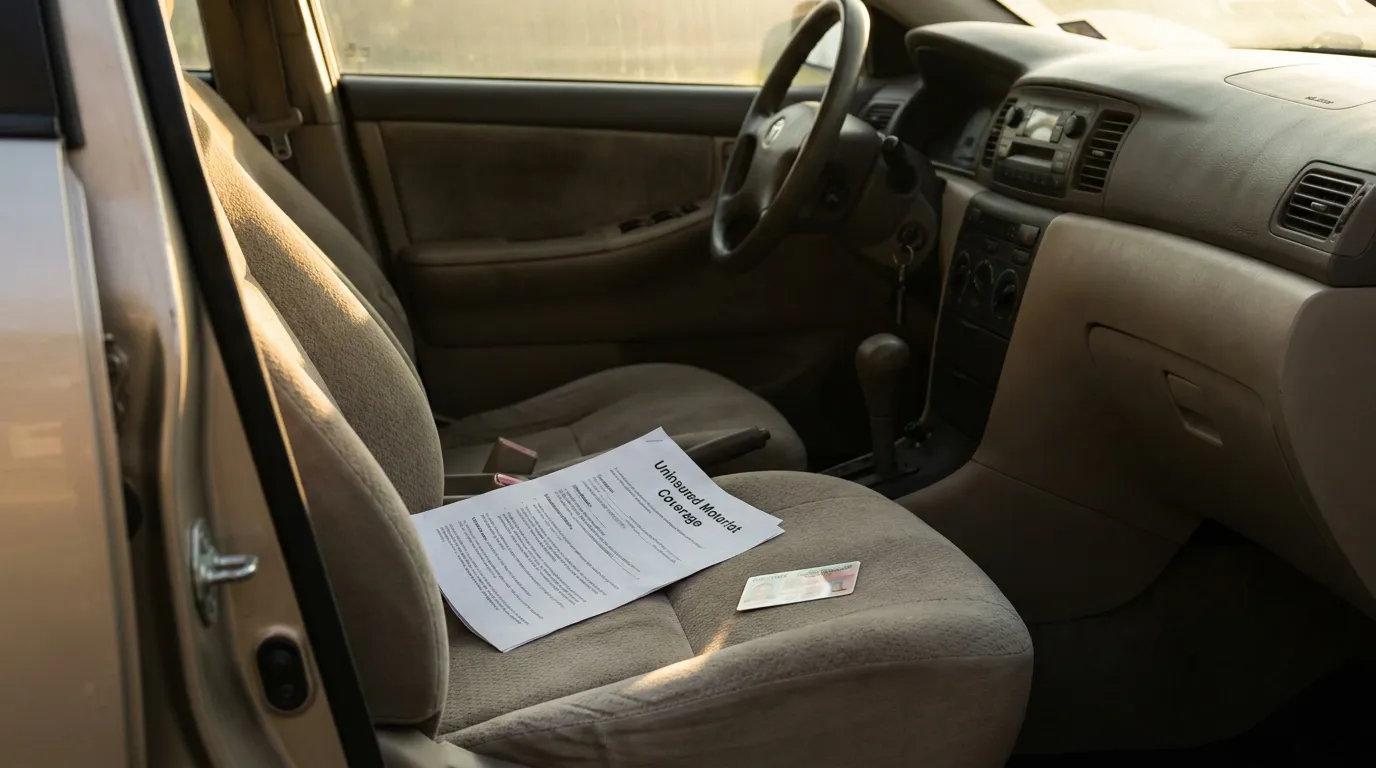
Rejections and reduced-limit selections must be made on an office-approved form. Fla. Stat. § 627.727(1) (2025) requires a heading in 12-point bold type warning that "You are electing not to purchase certain valuable coverage which protects you and your family or you are purchasing uninsured motorist limits less than your bodily injury liability limits," and provides that a named insured’s signature creates a conclusive presumption of an informed, knowing rejection of coverage or election of lower limits on behalf of all insureds. The full text appears in the Florida insurance statutes maintained by the Legislature.
A parallel rule governs the non-stacked election. Section 627.727(8) requires the insurer to inform the named insured on an office-approved form of the limitations imposed, and a signature creates a conclusive presumption of informed, knowing acceptance. Because such an election generally continues on renewal until the insured requests a change in writing, confirm what is in the file before assuming stacked coverage is unavailable.
If no properly executed, office-approved form exists, the conclusive presumption generally does not attach, and an insured may still have UM rights even when the carrier asserts the coverage was declined or limited.
💡 Pro Tip: Request a certified copy of your complete policy file, including every signed UM selection and rejection form, rather than relying on the declarations page alone.
When a UM Carrier Handles Your Claim Unreasonably
Your own insurer may not be on your side once you file a UM claim. Adjusters may dispute causation, argue preexisting conditions, or delay evaluation. Knowing what to do when hit by an uninsured driver may help preserve evidence before disputes harden.
Florida law may provide a remedy in limited circumstances. Fla. Stat. § 627.727(9) (2025) provides that damages recoverable from an uninsured motorist carrier in an action brought under § 624.155 include the total amount of the claimant’s damages, including the amount in excess of policy limits, any interest on unpaid benefits, reasonable attorney’s fees and costs, and any damages caused by a violation of a law of this state. Such an action generally requires a filed civil remedy notice and a 60-day cure period under § 624.155(3).
Steps that commonly help protect a UM claim include:
- Reporting the crash to your carrier promptly and in writing
- Obtaining the at-fault driver’s policy limits before settling
- Requesting written consent from your UM insurer before releasing the tortfeasor
- Documenting treatment gaps, wage loss, and functional limitations contemporaneously
Frequently Asked Questions
1. Does stacked UM coverage help if I own only one vehicle?
Stacking generally matters most across multiple insured vehicles. With a single vehicle, the practical difference is narrower, though the limitations under § 627.727(8) may still affect claims involving non-owned vehicles.
2. How much cheaper is non-stacked coverage?
Fla. Stat. § 627.727(8) requires filed rates reflect a reduction in the UM premium of at least 20 percent. Actual pricing varies by insurer and risk profile.
3. Can my insurer reduce my UM payment by what PIP already paid?
Generally not by setoff. Section 627.727(1) states UM shall not be reduced by a setoff against any coverage, though UM is not intended to duplicate benefits already received, and policies issued under § 627.727(8) may lawfully include certain setoffs.
4. What if I do not remember rejecting UM coverage?
Ask for the signed form. Absent a compliant, office-approved rejection, coverage may still exist, but whether the statutory presumption applies depends on the specific document and circumstances.
5. Should I settle with the at-fault driver first?
Settling without notifying your UM carrier and following the § 627.727(6) approval procedure may jeopardize the claim. Consult counsel before signing any release.
Protecting the Coverage You Already Paid For
Florida’s thin minimum limits and high share of uninsured drivers make UM a practical backbone of many serious injury recoveries in Hollywood. The statutory framework in § 627.727 generally favors coverage by default, but signed forms may quietly narrow it for years. A careful review by an experienced Hollywood FL injury attorney may identify coverage a claimant did not realize existed.
If an uninsured or underinsured driver injured you or a family member, Salpeter Gitkin, LLP is ready to review your coverage and explain your options. Call (954) 467-8622 or visit the firm’s website to schedule a consultation today.
Disclaimer: This content is for informational purposes only and is not legal advice. Every case is unique, and results may vary. Consult an attorney about your specific circumstances.