When a Crash Injures Your Spouse, It Injures Your Marriage Too
Key Takeaways: A loss of consortium claim may allow the uninjured spouse of someone seriously hurt in a Hollywood FL car accident to seek compensation for lost companionship, affection, comfort, and household services. Florida treats consortium as a derivative claim dependent on the injured spouse’s underlying negligence case. Proving the claim requires evidence about the marriage before and after the crash, including medical records, caregiving logs, and testimony about changed daily life. Comparative fault under Fla. Stat. § 768.81 may reduce an award, and Florida’s no-fault PIP system does not pay for relationship losses. Limited companionship claims may be available to dependent children and parents under specific circumstances. Most negligence claims accruing after March 2023 must be filed within two years.
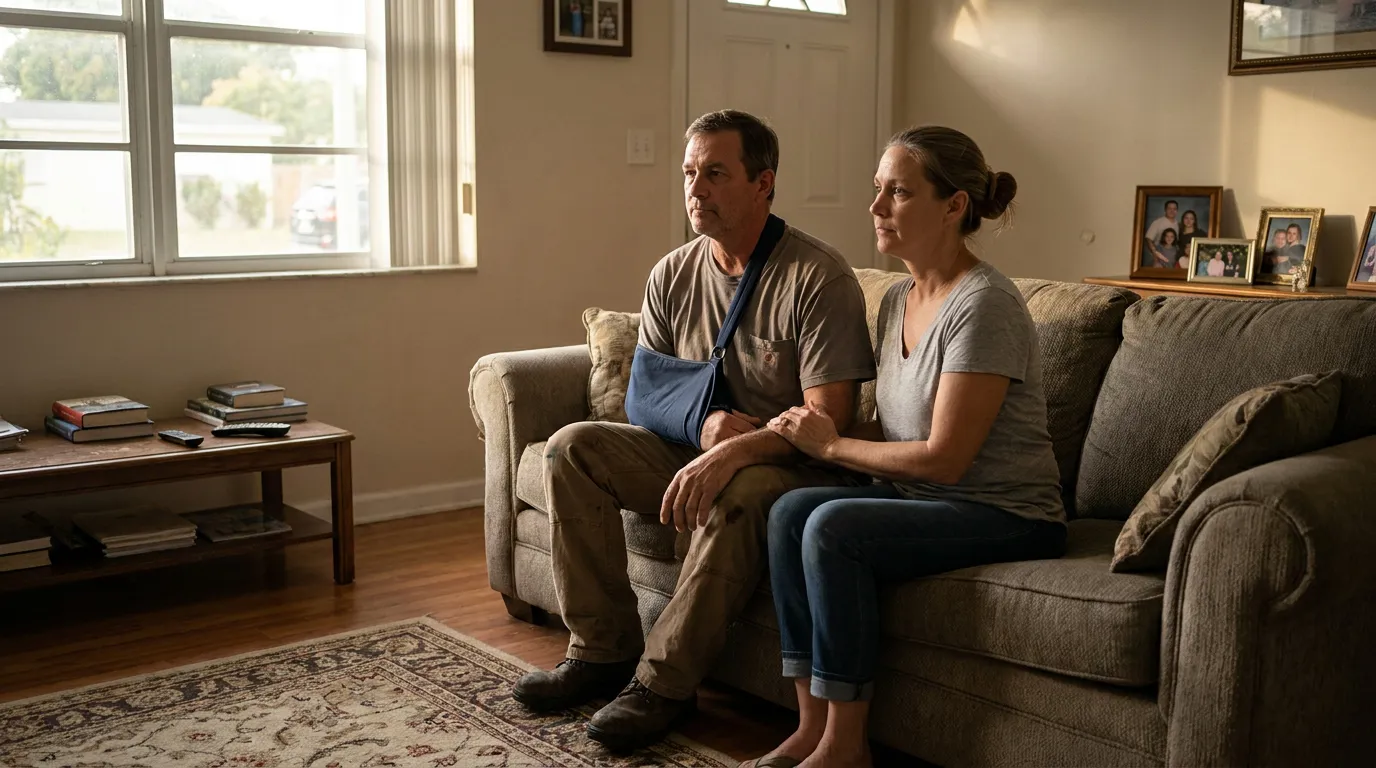
A loss of consortium car accident claim allows a spouse to seek compensation for relationship losses when the other spouse suffers serious injuries in a collision. In Florida, these damages cover intangible harms like lost companionship, affection, comfort, society, and household services. If your husband or wife was badly hurt in a Hollywood FL car accident, the law recognizes you may have lost something real too, even though you were never in the vehicle.
If your family is dealing with the aftermath of a serious collision, guidance from an experienced legal team can help you understand your options. The attorneys at Salpeter Gitkin, LLP handle serious injury and wrongful death matters throughout Broward County. Call (954) 467-8622 or contact us now to discuss your situation.
The Consortium Definition Florida Courts Apply
Loss of consortium compensates for the loss of the relationship itself, not medical bills or lost wages. The spousal claim comes from Florida common law, which recognizes loss of consortium as a derivative claim dependent on the injured spouse’s underlying negligence case. Fla. Stat. § 774.203(3) defines "Asbestos claim" within Florida’s asbestos and silica litigation chapter to include loss of consortium and other derivative claims in that context, reflecting two key points: consortium is recognized in Florida, and it is derivative in nature.
"Derivative" is the most important word in this area of law. A derivative claim depends on the injured person’s underlying negligence case. If the injured spouse cannot establish that another driver was negligent and caused the injuries, the consortium claim fails. Defenses that defeat or limit the injured spouse’s claim, such as comparative fault or a release, may affect the consortium claim as well. The two claims are typically pursued together in the same lawsuit.
Tangible Losses Versus Intangible Damages
Florida law draws a line between economic damages and the non-economic losses at the heart of a consortium claim. Fla. Stat. § 768.81(1) defines "economic damages" to include past and future lost income, medical expenses, and lost support and services. Loss of consortium generally falls on the non-economic side, although replacement household services may be presented as an economic component.
| Type of Loss | Examples | Who Typically Claims It |
|---|---|---|
| Economic damages | Medical bills, past and future lost income, lost support and services | The injured person |
| Non-economic damages (injured party) | Pain, suffering, disability, disfigurement | The injured person |
| Companionship damages | Loss of affection, society, comfort, marital relations, household services | The uninjured spouse |
How a Loss of Consortium Car Accident Claim Is Proven
Building a spousal injury claim requires evidence about the marriage before and after the collision. Insurance carriers rarely accept these claims at face value. Juries consider marriage length and stability, living arrangements, injury severity and permanence, and how daily life changed. Testimony from the spouses, family members, friends, and treating physicians carries significant weight.
Practical proof comes from ordinary details. Persuasive evidence typically includes:
- Medical records documenting permanent impairment, surgical history, or long-term care needs
- A journal describing caregiving duties absorbed after the crash
- Testimony about abandoned shared activities, travel, intimacy, and social life
- Proof of household tasks now handled by the uninjured spouse or paid help
💡 Pro Tip: Start a simple dated log within days of the crash. Contemporaneous notes about caregiving hours and canceled plans are more persuasive than a reconstruction written months later for litigation.
Comparative Fault Can Reduce What Your Family Recovers
Because the claim is derivative, fault assigned to the injured spouse may reduce a consortium award. Under Fla. Stat. § 768.81(2), contributory fault "diminishes proportionately the amount awarded as economic and noneconomic damages," but it "does not bar recovery." For causes of action accruing on or after March 2023, however, § 768.81(6) generally bars recovery entirely for a claimant found more than 50 percent at fault, an exception that does not apply to medical negligence claims.
Multiple at-fault drivers can complicate collection. Fla. Stat. § 768.81(3) provides that judgment is entered against each party on the basis of that party’s percentage of fault, not on joint and several liability, subject to limited exceptions. That means a spouse may hold a judgment spread across several defendants with differing insurance coverage.
PIP Does Not Cover Companionship Damages
Florida’s no-fault system pays limited medical and wage benefits and does not compensate relationship losses. Consortium damages may become available when the injured spouse can satisfy the statutory permanent injury threshold and pursue the at-fault driver directly. Our discussion of whether a no-fault state still allows lawsuits explains that threshold in greater detail.
Children, Parents, and the Limits of Florida Consortium Law
Florida may extend companionship-type claims beyond spouses, but with meaningful restrictions. Under Fla. Stat. § 768.0415, when negligence causes significant permanent injury to a parent resulting in permanent total disability, an unmarried dependent child may recover damages for permanent loss of services, comfort, companionship, and society. In United States v. Dempsey, 635 So. 2d 961 (Fla. 1994), the Florida Supreme Court recognized a mirror-image parental claim for loss of filial consortium, limited to parents of a child who suffers a significant injury resulting in permanent total disability.
That statutory claim exists only because the legislature created it. In Zorzos v. Rosen, 467 So. 2d 305 (Fla. 1985), the Florida Supreme Court declined to recognize a child’s common-law cause of action for loss of parental consortium and left the question to lawmakers, who responded with the 1988 enactment of section 768.0415. Key statutory terms such as "significant permanent injury," "dependent," and "permanent total disability" are undefined, creating interpretive ambiguity courts resolve case by case.
Wrongful Death Presents a Different Framework
When a Hollywood collision is fatal, consortium-style damages shift into Florida’s Wrongful Death Act. Fla. Stat. § 768.21(2) permits a surviving spouse to recover for loss of the decedent’s companionship and protection and for mental pain and suffering. Fla. Stat. § 768.21(3)-(4) allows minor children, and all children when there is no surviving spouse, to recover for lost parental companionship, instruction, and guidance plus mental pain and suffering, while each parent of a deceased minor child may recover for mental pain and suffering. Those claims are brought by the personal representative of the estate on behalf of the survivors.
Deadlines That Can End a Car Accident Spouse Claim
Because the claim rides on the injured spouse’s negligence action, the negligence limitations period governs. Fla. Stat. § 95.11(4)(a) requires that actions founded on negligence be commenced within two years, a period Florida shortened from four years for causes of action accruing after March 2023; claims that accrued before that date remain subject to the prior four-year period. Wrongful death actions are governed by a two-year deadline under § 95.11(5)(e). Exceptions and tolling doctrines exist, but Florida courts construe them narrowly.
Administrative deadlines are separate from civil filing deadlines. Insurance notice requirements, PIP benefit application windows, and pre-suit notice obligations in claims against government entities under Fla. Stat. § 768.28 operate on their own timelines and typically do not extend the civil limitations period. Anyone weighing a loss of consortium car accident claim lawyer consultation should treat calendar management as an early priority.
💡 Pro Tip: Avoid posting about vacations, workouts, or family milestones on social media while a consortium claim is pending. Defense counsel may use those posts to argue the marital relationship was less affected than claimed.
Common Obstacles in a Derivative Claim
Insurers frequently attack these claims as speculative or duplicative. A common argument is that companionship damages simply repackage the injured spouse’s pain and suffering award. Another challenge involves marital history, including prior separations or filings, which defendants may raise to question the relationship’s strength before the crash.
Vehicle ownership can expand the pool of responsible parties. Under Florida’s dangerous instrumentality doctrine, an owner who entrusts a vehicle to another may be held vicariously liable alongside the negligent driver, and courts have applied that principle to consortium claims.
Frequently Asked Questions
1. Can an unmarried partner file a loss of consortium claim in Florida?
Generally, no. Florida consortium claims are tied to legally recognized marriages existing at the time of injury. Long-term unmarried partners typically lack standing.
2. Is a consortium claim filed separately from my spouse’s case?
In most situations the claims are pleaded together in a single lawsuit. Because the claim is derivative, separating it can create procedural complications and limitations problems.
3. Does a settlement by my injured spouse extinguish my claim?
It can, depending on how the release is drafted. Broadly worded releases sometimes purport to resolve all family claims, making it essential that both spouses review settlement documents before signing.
4. How are companionship damages calculated?
There is no fixed formula. Juries assess the nature and permanence of injuries, the length and quality of marriage, and concrete changes in daily life, making awards highly fact-dependent.
5. Do the March 2023 tort reforms affect my claim?
They may. The modified comparative negligence bar and the shortened negligence limitations period both apply to causes of action accruing on or after the effective date.
Protecting the Relationship the Collision Changed
A serious crash can reshape two lives, not one. Florida law acknowledges that reality through consortium claims, but the path is narrow: the claim is derivative, potentially subject to comparative fault reductions or a complete bar, constrained by a two-year negligence deadline in most cases, and dependent on proof about a marriage most people never expected to document. Understanding these damages early may put families in a stronger position.
You do not have to sort through these questions alone. The team at Salpeter Gitkin offers consultations to Hollywood and Broward County families facing life-altering injuries. Call (954) 467-8622 or reach out to our team to have your circumstances reviewed.
Disclaimer: This content is for informational purposes only and is not legal advice. Every case is unique, and results may vary. Consult an attorney about your specific circumstances.