Why Notice Is the Deciding Issue in Most Hollywood Slip and Fall Claims
Key Takeaways: In a Hollywood slip and fall case, proving constructive notice is often the deciding issue under Fla. Stat. § 768.0755(1), which requires showing the business knew or should have known about the hazard. The statute permits two circumstantial routes: proving the condition existed long enough that ordinary care would have revealed it, or proving the condition occurred with regularity and was foreseeable. Length-of-time proof relies on surveillance timestamps, inspection logs, footprints, and dried or tracked liquid, while recurring-condition proof relies on prior incident reports and maintenance records. Florida courts have held that describing a substance as dirty or dark may not suffice without an additional "plus" factor, and Encarnacion v. Lifemark Hospitals shows how claims fail without timeline evidence. Section 768.0755(2) preserves common-law duties, so negligent maintenance and failure-to-warn theories may proceed alongside notice analysis. Because video is often overwritten within weeks, preserving photos, witness information, incident reports, and medical records early is critical.
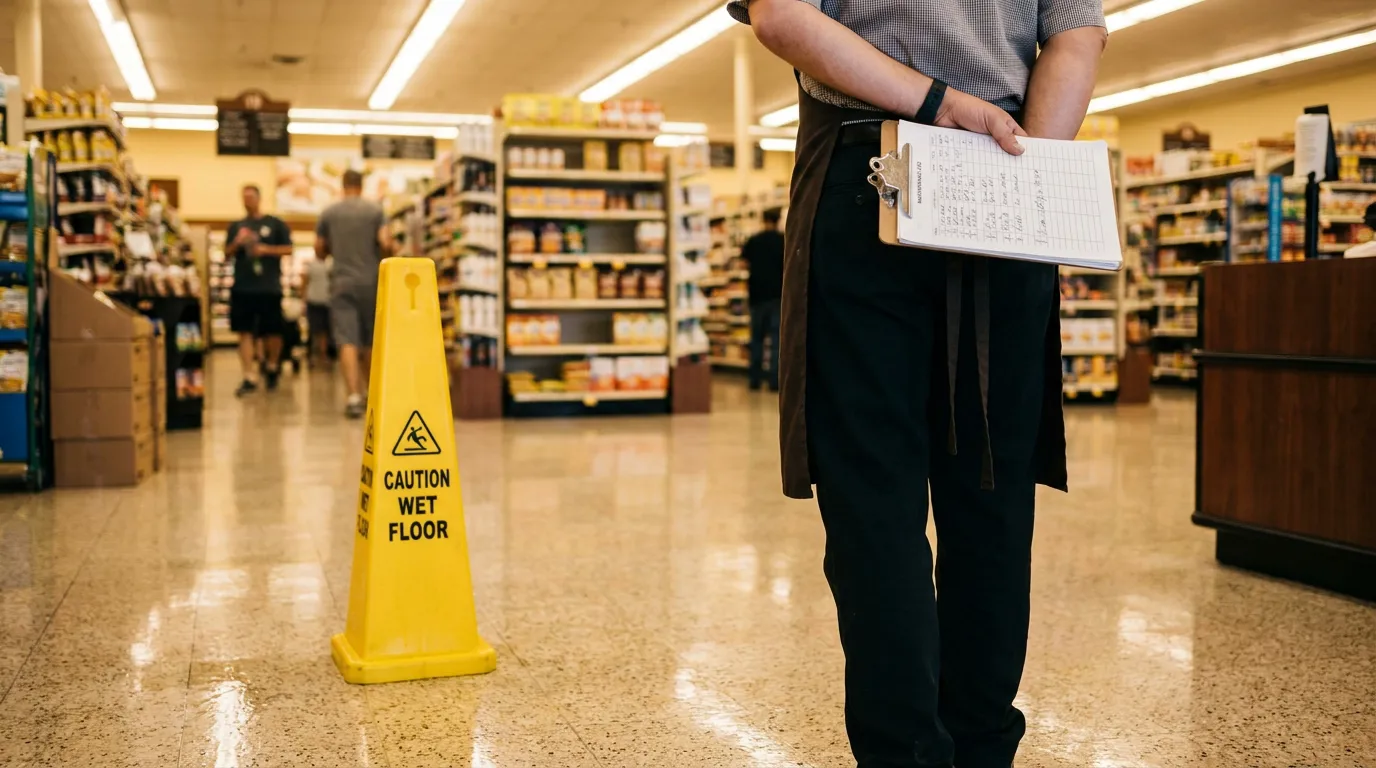
If you fell on a wet floor in a Hollywood store, restaurant, or medical facility, the outcome may turn on one question: did the business know, or should it have known, about the hazard? Under Fla. Stat. § 768.0755(1), a person who slips and falls on a transitory foreign substance in a business establishment must prove the business had actual or constructive knowledge of the dangerous condition. Because businesses rarely admit awareness, most claims rise or fall on constructive notice, which the statute allows plaintiffs to establish through circumstantial evidence.
If you were injured on someone else’s property in Broward County, Salpeter Gitkin, LLP can review what evidence may still be preserved. Call (954) 467-8622 or contact our team today to discuss your situation before critical footage is overwritten.
What Florida’s Slip and Fall Statute Actually Requires
The statutory framework is narrower than many injured people expect. Fla. Stat. § 768.0755(1) places the burden on the injured person to show the business had actual or constructive knowledge of the dangerous condition and should have remedied it. Notice is one element among several, but it frequently decides whether a case survives summary judgment.
This provision was enacted in 2010 as s. 1, ch. 2010-8. Most Florida case law interpreting the constructive-notice standard developed after that date, and older decisions applying the earlier burden-shifting framework may not reflect the current burden. Readers can consult the Florida negligence statutes maintained by the Legislature.
The statute did not erase broader property owner duties. Fla. Stat. § 768.0755(2) provides that the section "does not affect any common-law duty of care owed by a person or entity in possession or control of a business premises." Claims based on negligent maintenance or failure to warn may proceed alongside notice analysis, though courts have generally declined to recognize a separate "mode of operation" theory that would excuse the statutory notice requirement.
Proving Constructive Notice Under the Two Statutory Paths
Florida gives plaintiffs two distinct routes to constructive knowledge. Fla. Stat. § 768.0755(1)(a)-(b) allows constructive knowledge through circumstantial evidence showing either that the dangerous condition existed long enough that ordinary care should have revealed it, or that the condition occurred with regularity and was therefore foreseeable.
The Length-of-Time Theory
The first path asks how long the hazard sat unattended. Surveillance footage, timestamps, footprints or cart tracks through a spill, dried or dirty liquid, and inspection logs matter because this hazard notice evidence may support the inference that the substance remained long enough that a reasonably careful business should have discovered and cleaned it.
Courts have set limits on appearance evidence alone. Florida appellate decisions have held that describing a substance as "oily," "dirty," and "dark" may not suffice without a "plus" factor, additional facts allowing a jury to infer the substance sat long enough to become discolored. Results vary with the full record, making early evidence preservation critical.
The Recurring-Condition Theory
The second path proves foreseeability by showing the same hazard happens repeatedly. A leaking freezer, a produce aisle that frequently drips, or an entrance that repeatedly gets wet during rainstorms may support this theory of premises liability negligence in Florida. Prior incident reports, maintenance requests, and repeat-hazard records are often the strongest proof.
This route can be valuable when no one can pin down a timeline. If footage is gone or the spill was discovered immediately after your fall, a documented pattern may still support foreseeability, though courts consider how similar the prior conditions were in location, cause, and circumstances.
How Circumstantial Evidence Fits Together
You generally do not need to show a manager personally saw the spill. Fla. Stat. § 768.0755(1) expressly states that constructive knowledge may be proven by circumstantial evidence, so tracked-through dirty liquid, footprints, or melted ice may support the necessary inference. Florida courts have cautioned that an inference cannot be stacked on another inference, so circumstantial proof must reasonably point to duration or regularity on its own.
💡 Pro Tip: Photograph the hazard from multiple angles before anyone cleans it, including a wide shot showing nearby displays, signage, and the absence of warning cones. Those wide shots may become the "plus" facts that appearance testimony alone cannot supply.
What Happens When the Evidence Falls Short
A Florida appellate decision illustrates how claims can fail on the notice element. In Encarnacion v. Lifemark Hospitals of Florida, 211 So. 3d 275 (Fla. 3d DCA 2017), the court applied Fla. Stat. § 768.0755(1) and affirmed summary judgment because the plaintiff’s interrogatory answers and depositions did not establish how long the substance had been on the floor. Her account suggested the liquid had been deposited shortly before she fell. As a Third District decision, it is binding in Miami-Dade and Monroe Counties and persuasive in Broward County, which lies in the Fourth District.
That case also addressed outside cleaning vendors. The court noted that contract cleaning companies can be liable to injured third parties for negligent performance of contractual duties, citing Maryland Maintenance Service v. Palmieri, 559 So. 2d 74 (Fla. 3d DCA 1990). Still, it held the housekeeping company had no duty to constantly patrol the accident area under its emergency room cleaning specifications. The full Encarnacion opinion text is publicly available.
Hazard Notice Evidence Worth Preserving Right Away
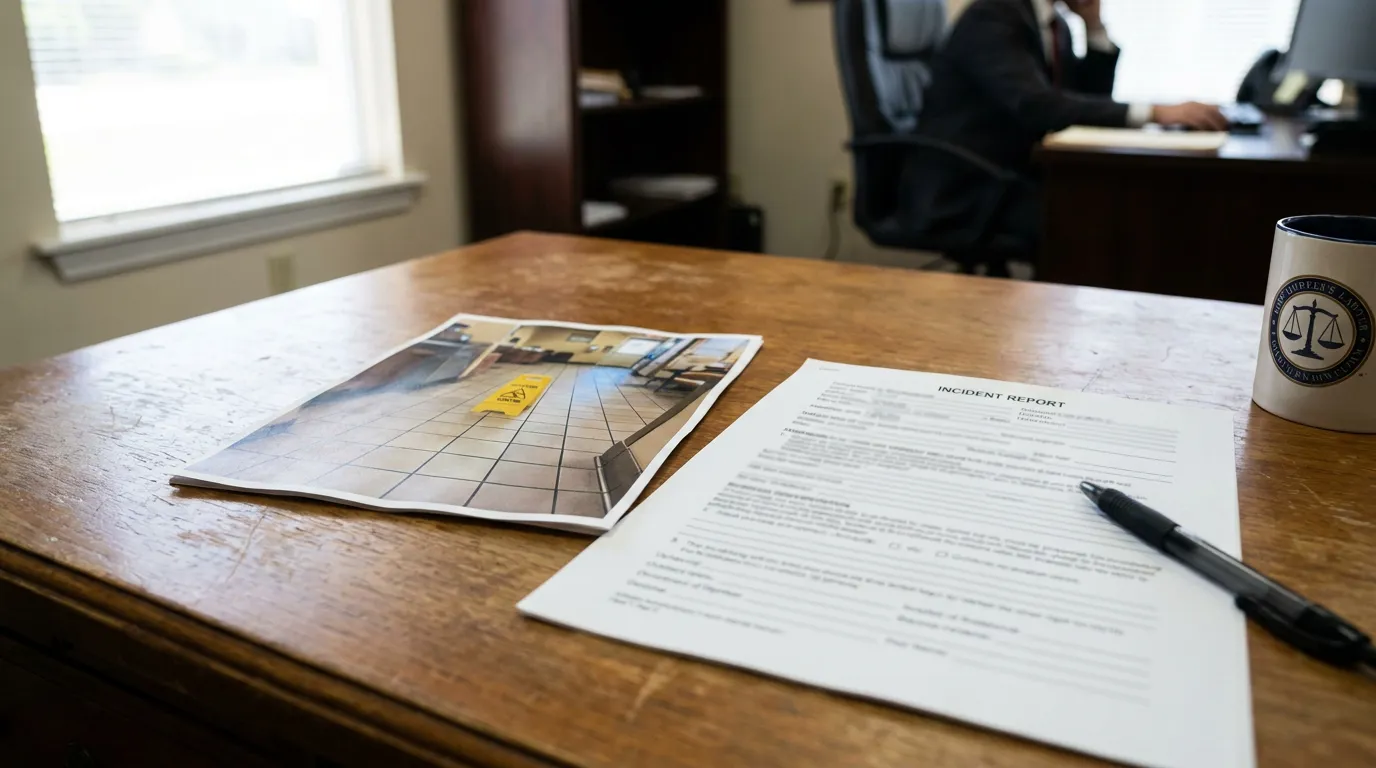
The evidence that proves notice tends to disappear fastest. Store camera systems in Broward County frequently overwrite footage within weeks, and incident reports often stay in a company’s internal files unless someone formally requests them. Acting early generally improves what a lawyer may obtain.
- Photos and video of the substance, its spread, and any tracks through it
- The name and contact information of every employee and witness present
- A copy of, or reference number for, the incident report you filed
- Your footwear and clothing from the day, unwashed and stored as-is
- Medical records connecting your treatment to the date of the fall
- Written notes about weather, lighting, warning signs, and floor mats
| Statutory Path | Core Question | Typical Supporting Proof |
|---|---|---|
| § 768.0755(1)(a) Length of time | How long was the hazard present? | Surveillance timestamps, inspection logs, dried or tracked-through liquid |
| § 768.0755(1)(b) Regularity | Does this hazard recur? | Prior incident reports, maintenance records, repeat-complaint history |
| § 768.0755(2) Common-law duty | Was maintenance or warning inadequate? | Cleaning protocols, staffing records, absence of warning cones |
💡 Pro Tip: Send a written preservation request for video as soon as possible rather than relying on a verbal request at the scene. A documented request may matter later if footage goes missing.
Practical Challenges in a Broward County Slip and Fall Case
Insurers commonly argue that the spill appeared seconds before the fall. That defense mirrors the reasoning in Encarnacion, and it can be difficult to rebut without timeline evidence. Understanding what makes Hollywood business owners liable for customer falls may help injured people anticipate these arguments.
Comparative fault and medical causation add further complexity. A business may contend you were distracted, wearing improper footwear, or that your injuries stem from a preexisting condition. Under Florida’s modified comparative negligence statute, a plaintiff found more than 50 percent at fault may be barred from recovering, while lesser fault reduces damages proportionally.
Deadlines matter and should not be assumed. Florida shortened the limitations period for most negligence claims from four years to two years for causes of action accruing on or after March 24, 2023. Claims involving governmental entities are governed by Fla. Stat. § 768.28, which imposes separate presuit notice requirements and damage caps.
Frequently Asked Questions
1. What is the difference between actual and constructive notice?
Actual notice means the business genuinely knew about the hazard, such as an employee who saw or caused the spill. Constructive notice means it should have known, which Fla. Stat. § 768.0755(1)(a)-(b) permits proving through circumstantial evidence of duration or regularity.
2. Is a dirty or dark liquid enough to show the store knew about the hazard?
Often not on its own. Many Florida decisions require a "plus" factor, additional facts beyond appearance that could let a jury reasonably infer the substance sat long enough to become discolored.
3. Can I still have a claim if there is no surveillance video?
Possibly. The recurring-condition path under Fla. Stat. § 768.0755(1)(b) may allow proof of foreseeability through prior incidents and maintenance history, though whether that suffices depends on the specific facts.
4. Does the statute replace ordinary negligence principles?
No. Fla. Stat. § 768.0755(2) preserves any common-law duty of care owed by a person or entity in possession or control of a business premises, so maintenance and failure-to-warn theories may coexist with notice analysis.
5. What if a third-party cleaning company was responsible for the floor?
Cleaning vendors may owe duties to injured third parties for negligent performance of their contractual obligations, but courts examine the actual scope of the contract. The property owner may still face its own independent duty to invitees.
Putting the Pieces Together After a Fall
Proving constructive notice in Hollywood slip and fall cases requires more than showing you were hurt on someone else’s floor. Fla. Stat. § 768.0755(1) puts the burden on you to establish actual or constructive knowledge, and the two statutory routes favor those who move quickly to secure footage, incident reports, and witness accounts.
If you are weighing a Broward County slip and fall claim, the team at Salpeter Gitkin, LLP has extensive experience handling these cases and can be reached as a premises liability attorney Hollywood residents trust. Call (954) 467-8622 or request a case review to learn what evidence may still be available in your case.
Disclaimer: This content is for informational purposes only and is not legal advice. Every case is unique, and results may vary. Consult an attorney about your specific circumstances.