How the CDC Decides a Cruise Ship Has an Official Outbreak
Key Takeaways: The CDC’s 3% threshold triggers public reporting of cruise ship gastrointestinal illness outbreaks when a voyage falls under Vessel Sanitation Program jurisdiction and at least 3% of passengers or crew report symptoms to onboard medical staff. Reportable cases require three or more loose stools or vomiting paired with another symptom, with norovirus being the most common cause. Underreporting can keep genuine outbreaks below the posting line. Crossing the threshold doesn’t prove negligence, but outbreak data, timelines, and inspection records may evidence notice and response. Documentation like medical records, receipts, photographs, and passenger contacts strengthen claims, and preservation requests should go out early. Federal maritime law typically governs passenger claims, and ticket contracts commonly shorten notice and filing deadlines, making prompt action important.
The 3% threshold is the point at which the CDC publicly posts a gastrointestinal illness outbreak aboard a cruise ship. Under the Vessel Sanitation Program, an outbreak is posted when the ship falls under VSP jurisdiction and at least 3% of passengers or crew report symptoms to the ship’s medical staff. That percentage carries weight on vessels carrying thousands of people and can become central evidence when a sick passenger questions whether the cruise line responded reasonably.
If you or a family member became ill aboard a ship sailing from South Florida, the team at Salpeter Gitkin, LLP is available to review what happened. Call (954) 467-8622 or contact us now to discuss your options with a cruise passenger illness lawyer.
Who Sets the Cruise Norovirus Outbreak Threshold
The 3% figure comes from the federal government, not from the cruise lines themselves. The CDC’s Vessel Sanitation Program helps the cruise industry prevent and control public health issues onboard, including gastrointestinal illness. This matters because cruise lines cannot redefine the federal reporting standard, though the program is a public health regulatory framework and does not create a private right of action for passengers.
VSP jurisdiction reaches voyages that include both U.S. and foreign ports. That captures the overwhelming majority of itineraries leaving Port Everglades and other South Florida homeports near Hollywood. The CDC may post other outbreaks of public health significance even when the 3% mark is not reached, so the threshold functions as a floor rather than a ceiling.
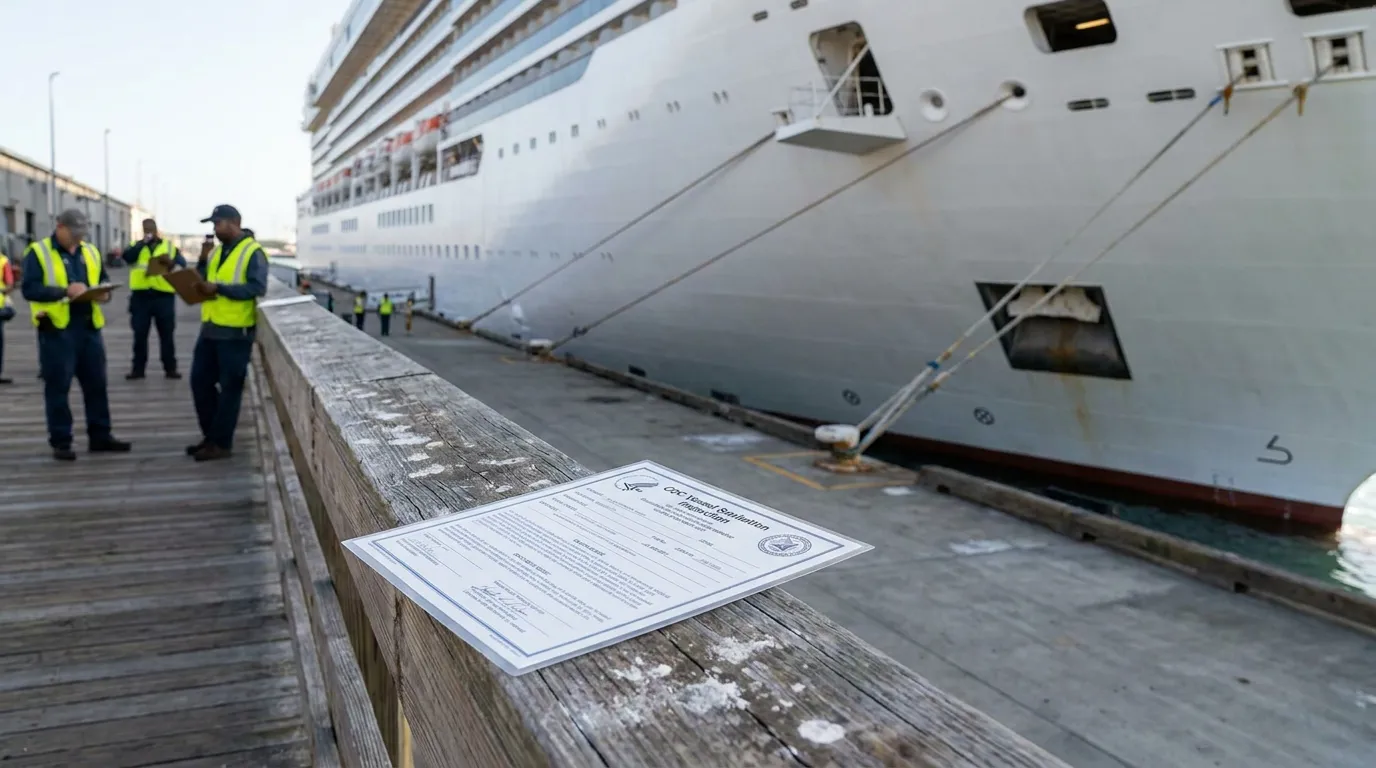
Federal authority over these inspections has continued without interruption. A Federal Register notice published August 15, 2025 confirmed that vessel sanitation inspection fees instituted in fiscal year 2025 would continue in fiscal year 2026. The notice explains that program costs include administration, travel, staffing, sanitation inspections, and outbreak response, indicating that outbreak investigation is a funded, built-in function.
Why Fee Structure Reveals Inspection Frequency
Inspection fees scale with vessel realities. Weighted annual inspections account for vessel size, number of inspectors needed, travel logistics, and how many times a vessel arrives in U.S. jurisdiction each year. Large ships homeported in Florida therefore receive frequent federal sanitation oversight, generating documentation that may prove useful in later claims.
What Counts as a Reportable Case Under Vessel Sanitation Program Reporting
The percentage only works if the underlying case definition is applied consistently. The CDC defines a reportable acute gastroenteritis case as three or more loose stools in a 24-hour period, or more than normal for that person, or vomiting accompanied by at least one additional symptom. Cruise ships within VSP jurisdiction must report these cases to the CDC.
Additional symptoms that can complete the definition include:
- Diarrhea
- Muscle ache
- Headache
- Abdominal cramping
- Fever
Norovirus is the most frequently identified cause of posted cruise outbreaks. The CDC’s cruise ship outbreak listings for 2026 identify norovirus aboard vessels including Ruby Princess for a voyage running from June 12 through July 2, 2026, along with Caribbean Princess and Star Princess. Some entries are marked "Unknown," because the causative agent may not be identified when specimens are not provided or when symptoms begin after the voyage ends.
| Element | What the CDC Requires |
|---|---|
| Jurisdiction | Voyage includes both U.S. and foreign ports |
| Illness rate | 3% or more of passengers or crew |
| Reporting channel | Symptoms reported to the ship’s medical staff |
| Discretionary posting | Outbreaks of public health significance below 3% |
💡 Pro Tip: Report symptoms to the onboard medical center as soon as they start. Prompt reporting helps outbreaks get detected quickly so steps can be taken to limit spread, and it creates a contemporaneous record with date, time, and symptom description.
Why Underreporting Distorts Cruise Ship Illness Statistics in Florida
The threshold depends entirely on passengers self-reporting to the ship’s medical center. Illness that is never reported cannot be counted, which means an outbreak may go undetected and unposted even when many passengers are genuinely sick. Passengers who ride out symptoms in their cabins may unintentionally keep the official number below the reporting line.
Scale explains why a seemingly small percentage matters. The CDC has noted that more than 20 million passengers embarked from North American ports in 2025, and that exposure generally comes from contaminated food or water or from person-to-person contact. On large ships, 3% can translate to well over one hundred people, and crowded dining rooms, buffets, and shared restrooms may accelerate transmission.
The Program’s Core Functions Behind the Number
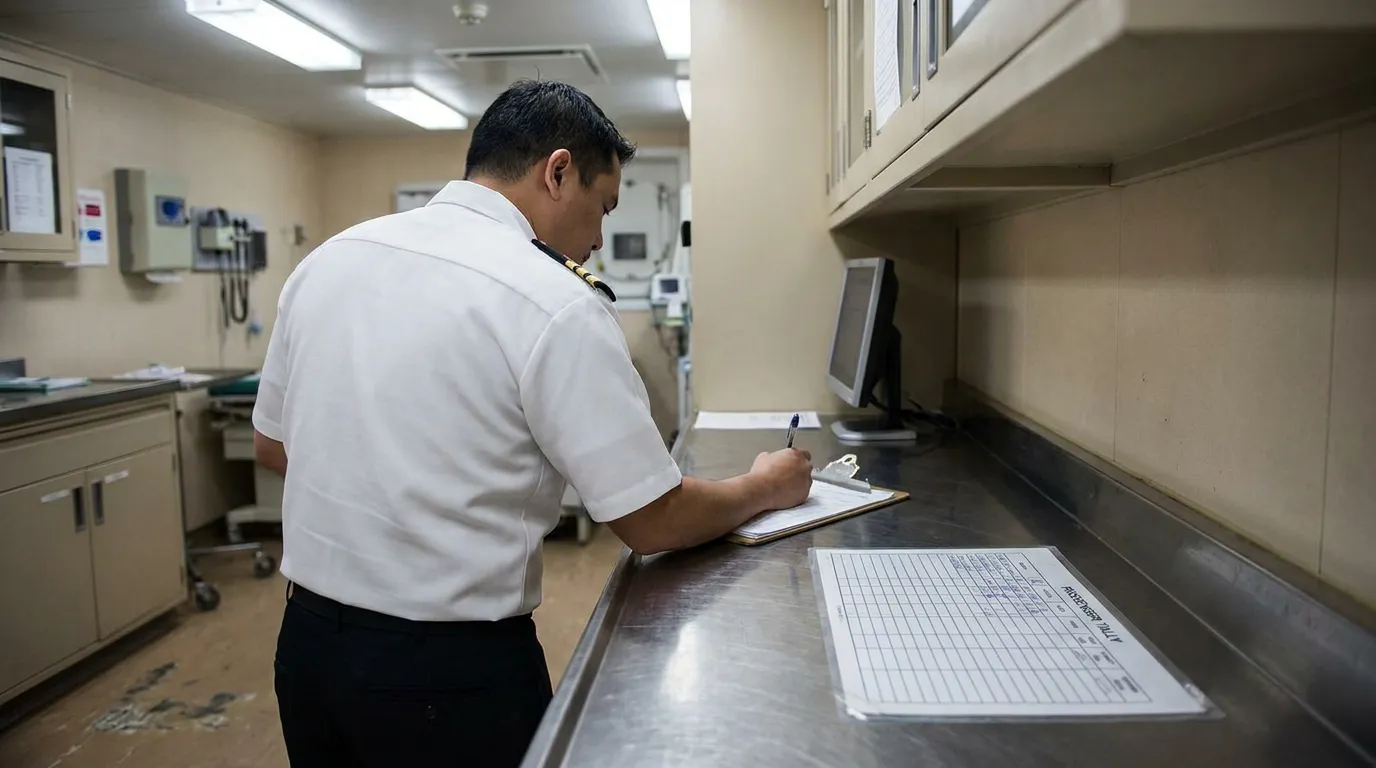
Monitoring and investigation are listed among the program’s central duties. According to CDC materials describing how the Vessel Sanitation Program works, the agency monitors data on illnesses, investigates and responds to outbreaks, and inspects cruise ships across eight major areas, in addition to conducting plan reviews and training. That monitoring function is the mechanism through which reported case counts get compared against the reporting threshold.
How the Threshold Relates to Cruise Ship Norovirus Outbreak Liability
Crossing the 3% mark does not, by itself, establish legal fault. A passenger pursuing a negligence claim must still show that the carrier owed a duty of reasonable care, breached it, and caused compensable harm. Under general maritime law, courts have often required proof that the operator had actual or constructive notice of the hazardous condition. Outbreak data, reporting timelines, and sanitation inspection records may be highly relevant to whether the operator knew or should have known about a hazard and whether its response was reasonable.
Federal maritime law, not Florida negligence law, usually supplies the governing standard. Claims arising from injuries or illness aboard a vessel in navigable waters are generally governed by general maritime law, which can apply even when a case is filed in Florida court. State statutes addressing land-based businesses do not govern vessel outbreak reporting.
Florida’s vessel statutes address boating regulation rather than passenger illness. Provisions such as Fla. Stat. § 327.4108, concerning anchoring limitations for certain vessels, are part of Florida’s boating code and have no application to outbreak reporting, which is handled at the federal level through the Vessel Sanitation Program. Anyone weighing a claim should consult a lawyer about which authorities may apply to their facts.
Evidence That Often Matters in a Maritime Illness Claim in Hollywood FL
Documentation tends to be the difference between a provable claim and a frustrating one. Medical center visit records, onboard receipts, photographs of sanitation conditions, cabin sanitization notices, and names of other affected passengers can all help establish a timeline. Because ships turn over quickly and records are controlled by the operator, preservation requests need to go out early. A cruise ship norovirus outbreak liability lawyer can help identify what to request and when.
💡 Pro Tip: Save your boarding documents and ticket contract. Cruise tickets frequently contain notice requirements and forum-selection clauses that can shape where and how quickly a claim must be filed.
Deadlines That Can End a Claim Before It Begins
Maritime deadlines, not Florida’s two-year negligence statute, typically control. Federal law generally allows three years to bring a maritime personal injury or wrongful death action, 46 U.S.C. § 30106, and Florida’s general negligence period in Fla. Stat. § 95.11(5)(a) usually does not apply to a passenger’s claim against an ocean carrier.
The statutory period is an outer limit, not a guarantee. Federal law permits passenger ticket contracts to shorten these periods, commonly to one year to file suit and six months to give written notice of a claim, and courts have routinely enforced reasonably communicated provisions of that kind, along with forum-selection clauses requiring suit in a particular court. Because these deadlines are often unforgiving, speaking with a cruise illness attorney in Hollywood FL promptly is the safer course.
Frequently Asked Questions
1. Does a posted outbreak mean the cruise line was negligent?
Not automatically. A posting reflects that a reporting threshold was met under the Vessel Sanitation Program, not that a legal standard of care was breached. It may serve as evidence relevant to notice and response.
2. What if my illness was never counted in the 3%?
You may still have a claim, depending on the circumstances. The CDC threshold governs public posting rather than private legal rights, and courts consider the specific facts of each passenger’s exposure and injury.
3. Why do some CDC entries list the cause as unknown?
The CDC has explained that the causative agent may remain unidentified when specimens are not provided or when symptoms begin after the voyage concludes. An unknown designation doesn’t necessarily mean norovirus was absent.
4. How quickly should I act after getting sick on a cruise?
As soon as possible. Ticket contracts commonly require written notice within six months and suit within one year, which can cut off a claim well before the general maritime three-year period expires.
5. Does the threshold apply to cruises that never leave U.S. waters?
The program’s jurisdiction covers voyages that include both U.S. and foreign ports, so itineraries falling outside that description may not be subject to the same posting rules. That doesn’t necessarily change a passenger’s legal rights under maritime law.
Turning Public Health Data Into a Documented Claim
The 3% threshold is a federal public health reporting trigger administered through the CDC’s Vessel Sanitation Program, depending on passengers reporting symptoms to onboard medical staff under a defined case definition. It shapes what the public learns about a voyage but doesn’t define a passenger’s legal rights. Outcomes in any illness claim depend heavily on specific facts, applicable maritime law, and ticket contract terms.
If a norovirus outbreak affected your voyage from a South Florida port, Salpeter Gitkin, LLP is prepared to evaluate the records and deadlines that may apply to your situation. Call (954) 467-8622 or schedule a consultation to get started.
Disclaimer: This content is for informational purposes only and is not legal advice. Every case is unique, and results may vary. Consult an attorney about your specific circumstances.