Understanding Your Rights After a Total Loss Dispute in Hollywood
Key Takeaways: An insurance company can generally decide whether to repair or total your vehicle based on your policy language and good-faith valuation methods, not your personal preference. Florida’s 80% repair-cost threshold under § 319.30 applies only to uninsured vehicles, so for insured claims the decision is policy-governed. While insurers have broad authority, § 626.9743 imposes real limits, requiring recognized valuation methods, equivalent-quality parts, pre-loss repair quality, and written explanations of deductions. Manipulating estimates downward or improperly redirecting third-party claims can raise bad faith concerns. If you disagree with a valuation, you can request written explanations, invoke your policy’s appraisal clause, and gather independent estimates and comparable-vehicle data. Because each claim is fact-dependent, consulting an attorney can help you challenge unfair settlements and coordinate property and injury claims.
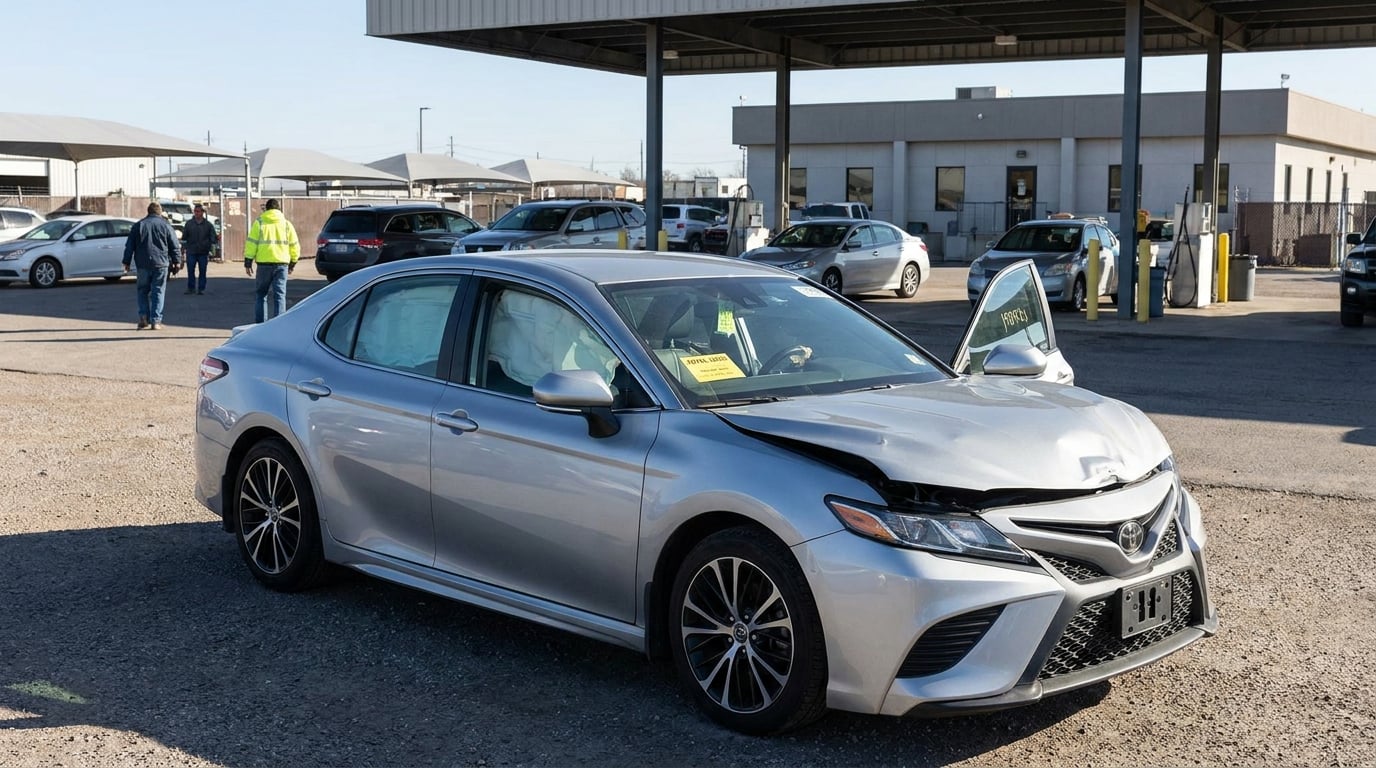
When your car is badly damaged in a Hollywood crash, you may worry that your insurer can simply declare it a total loss against your wishes. The short answer is nuanced: an insurer generally makes the total loss decision based on the insurance policy and its valuation methodology, not your personal preference. Florida law sets boundaries on carrier behavior to protect you from unfair adjustment practices after a collision.
If you are facing a forced total loss dispute or inadequate settlement after a crash, the team at Salpeter Gitkin, LLP is ready to help. You can reach our office by calling (954) 467-8622 or through our online case review request to discuss your options.

How Florida Defines a Total Loss
A total loss generally occurs when repair costs approach or exceed a vehicle’s value, but the legal framework depends on whether the car is insured. Florida’s 80% repair-cost threshold under § 319.30 applies specifically to uninsured vehicles. For an insured claim, the total loss decision is treated as a policy-governed adjustment decision rather than a fixed statutory formula.
This distinction matters significantly. Because the threshold lives in the uninsured-vehicle portion of the statute, an insurer may lawfully choose to repair rather than total a vehicle even when repair figures approach that percentage, provided it complies with the insurance contract and applies its valuation methodology in good faith.
💡 Pro Tip: Request a copy of your full policy and any repair estimates in writing. These documents control how your insurer must treat the total loss decision and provide a baseline if a dispute arises.
Can Insurance Company Force You to Total Your Car?
The question of whether an insurance company can force you to total your car lacks a one-size-fits-all answer, but policy language usually drives the outcome. An insurer generally has the contractual right to elect repair or total loss, and your lack of consent to repairs above an internal threshold does not automatically convert the claim into a mandatory total-loss situation under Florida law.
That authority is not unlimited. When an insurer settles a total loss based on actual cash value, Florida Statute § 626.9743(5)(a) requires it to use recognized valuation methods, such as the cost of comparable vehicles in the local market, electronic databases or guidebooks, or quotations from licensed dealers. In Signor v. Safeco, courts clarified that an insurer need not comply with more than one of the enumerated methods listed under subsection (5)(a).
Knowing whether the insurer total car decision was handled correctly often requires examining the numbers. If you are unsure whether your carrier valued your vehicle fairly, review our earlier piece explaining how forced total loss claims work in Florida.
What the Statute Requires of Your Insurer
Florida Statute § 626.9743 governs the adjustment and settlement of both personal and commercial motor vehicle insurance claims statewide. The statute appears under Part IX, titled Unfair Insurance Trade Practices, so violations could potentially constitute unfair trade practices.
Here are key obligations the statute places on insurers handling a total loss claim in Florida:
- Replacement vehicle option: Under § 626.9743(5)(b), an insurer may elect to offer a comparable replacement vehicle of the same manufacturer, the same or newer model year, and similar body type, options, and mileage instead of a cash payout.
- Quality of parts: Under § 626.9743(4), an insurer may not require replacement parts that are not at least equivalent in kind and quality to the parts damaged before the loss.
- Required repair shops: Under § 626.9743(3), if an insurer elects to repair and requires a particular shop, it must restore the vehicle to its pre-loss condition in performance and appearance at no additional cost beyond what the policy states.
- Written explanation of deductions: Under § 626.9743(6), when an insurer reduces a settlement for betterment or depreciation, the basis for any deduction shall be explained to the claimant in writing, if requested.
These rules give policyholders meaningful leverage. You can review the full statutory text through the Florida Senate’s published version of § 626.9743 to see exactly how each subsection is written.
💡 Pro Tip: If your carrier deducts for depreciation or betterment, ask for that explanation in writing right away. A clear written basis can expose miscalculations that reduce your payout.
When an Insurer Crosses the Line
Insurers must not manipulate estimates to avoid a particular outcome and must adjust claims honestly and consistently with the policy’s loss-settlement provisions. This is where many disputes after a Hollywood crash begin. Downward revisions to an estimate after a shop submits its final bill can raise legitimate bad faith concerns, especially if designed to keep the claim below the total loss point.
Third-party claimants also receive protection. Under § 626.9743(2), an insurer may not, when liability and damages owed under the policy are reasonably clear, recommend that a third-party claimant make a claim under their own policy solely to avoid paying the claim under its own policy.
| Insurer Action | Generally Permitted | Potential Red Flag |
|---|---|---|
| Electing repair over total loss | Yes, if in good faith | Manipulating estimates downward |
| Offering a comparable replacement vehicle | Yes, under § 626.9743(5)(b) | Using non-equivalent parts |
| Deducting for depreciation | Yes, with written basis | Refusing to explain deductions |
| Redirecting a third-party claim | No, when liability is clear | Avoiding payment under its policy |
💡 Pro Tip: Keep a dated log of every estimate, phone call, and email with your adjuster. A consistent paper trail is one of the strongest tools for challenging a questionable valuation.
Practical Steps to Protect Your Claim
If you disagree with how your insurer valued your vehicle or handled the total loss decision, you generally have several avenues to push back. Many policies contain an appraisal clause for disputes over the amount of loss. If yours does, you can invoke it to force a neutral valuation process on the actual cash value or the disputed figures driving the settlement.
Gathering independent evidence often strengthens your position. An independent repair estimate, photographs of the damage, and documentation of comparable vehicles in the local market can all help support a fair valuation. Because these matters are highly fact-dependent, results vary from case to case.
💡 Pro Tip: Before accepting any settlement check, confirm whether cashing it could be treated as a release of your claim. Once you sign or deposit certain payments, your ability to dispute the figure may be limited.
When the dispute involves injuries as well as property damage, the stakes rise considerably. Recovering for medical expenses, lost wages, and pain and suffering involves Florida’s no-fault PIP system and comparative-fault rules, including the 51% threshold that applies to crashes after March 2023. If you were hurt in a collision, working with a car accident attorney in Hollywood Florida can help you coordinate both sides of your claim.
Frequently Asked Questions
1. Can my insurer refuse to total my car even if repairs are expensive?
Generally, yes, an insurer may choose to repair rather than total a vehicle, provided it acts in good faith and follows the policy. Your disagreement with the repair figure does not automatically make the claim a total loss. A published Florida attorney’s answer on insurer total loss refusals explains the policy-governed nature of the decision.
2. Does Florida’s 80% rule force a total loss on insured cars?
Not directly. The 80% repair-cost threshold under § 319.30 expressly addresses an uninsured vehicle’s status as a total loss. For an insured claim, the decision is treated as a policy-governed adjustment, subject to the carrier’s good-faith valuation methodology.
3. What can I do if I think the valuation is too low?
You can request the written basis for any deductions and, if your policy allows, invoke the appraisal clause for a neutral valuation. Independent estimates and comparable-vehicle data can also support your position.
4. Can the insurer require me to use a specific repair shop?
Yes, but with conditions. Under § 626.9743(3), if the insurer requires a particular shop, it must restore your vehicle to its pre-loss condition in performance and appearance at no additional cost beyond what your policy states. Substandard parts are not permitted under § 626.9743(4).
5. Is a total loss dispute the same as my injury claim?
No, they are separate matters. Property damage valuation is governed by your policy and § 626.9743, while injury recovery involves PIP and comparative-fault rules. Both issues often arise from the same crash and benefit from coordinated handling.
Moving Forward After a Hollywood Total Loss Dispute
Whether an insurance company can force you to total your car ultimately turns on your policy language, the statutory valuation rules, and whether the carrier acted in good faith. Florida law gives drivers real protections, from written explanations of deductions to limits on substandard parts and improper claim redirection. Understanding these rules helps you recognize when a settlement may be unfair and when to challenge it.
You do not have to navigate a forced total loss or inadequate offer alone. The attorneys at Salpeter Gitkin, LLP are trusted by clients across South Florida and recognized for handling complex car accident matters. Call us today at (954) 467-8622 or complete our confidential contact form to discuss how we may be able to help protect your rights after a Hollywood crash.