Wet Decks, Slippery Liability: What Cruise Passengers Should Know
Key Takeaways: A cruise line can deny liability for a wet deck fall, but denial is not a legal verdict. Maritime and Florida law limit the carrier’s defenses of improper footwear or ignored warnings. Florida’s modified comparative fault rule under § 768.81(6) lets you recover if you are 50 percent or less at fault, while § 768.0755 allows you to prove the cruise line had actual or constructive knowledge of the hazard. Federal law under 46 U.S. Code § 30527 bars waiving liability for personal injury or death in certain passenger voyages, and vessel attachment remedies strengthen your position. Cruise tickets typically require six-month notice of claim and one-year filing deadlines, far shorter than Florida’s standard periods. Prompt documentation, photos, incident reports, witness details, and preserved surveillance footage counter attempts to shift blame. A denial is frequently the conversation’s start, not the end.
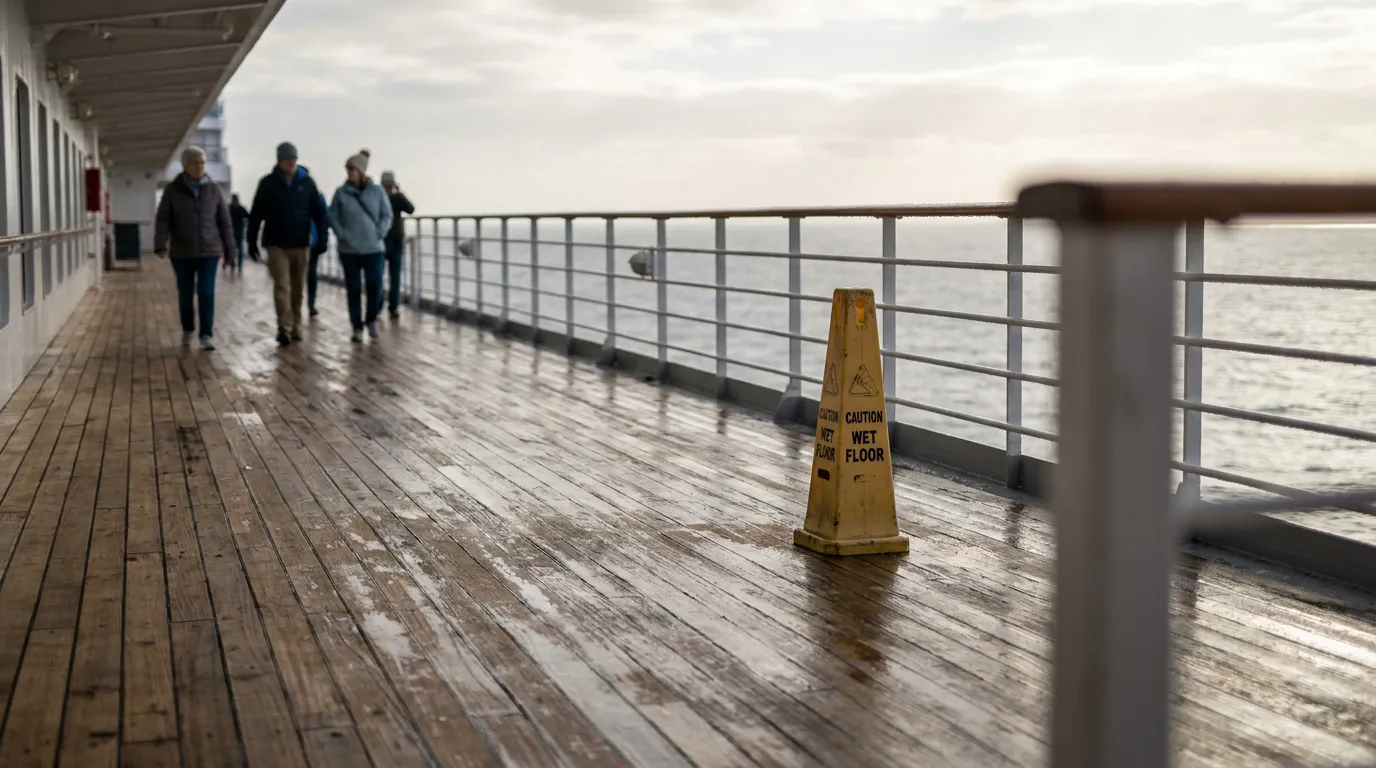
A cruise line can deny liability for a wet deck fall, but denial is not a legal victory. Operators routinely argue passengers ignored warning signs or wore improper shoes, yet maritime and Florida law limit these defenses. If you slipped on a saturated pool deck, mopped corridor, or rain-slicked promenade, you may still have a viable recovery path.
If you were hurt aboard a ship sailing from South Florida, the team at Salpeter Gitkin, LLP can help you understand your rights. Call (954) 467-8622 or use our secure contact form to discuss your claim.
Why Cruise Lines Try to Shift the Blame
Cruise lines deny liability because their defense strategy depends on making you responsible. When a passenger reports a wet deck fall cruise ship injury, the carrier typically argues the passenger was careless, wearing improper footwear or disregarding warnings. This tactic exists because Florida uses modified comparative fault that can reduce or eliminate recovery.
Under Florida Statute § 768.81(6), a party found greater than 50 percent at fault may not recover damages. If you are 50 percent or less at fault, you can still recover, though your award may be reduced proportionally. This is why liability denials focus on shifting blame, and why documenting the scene matters. Review governing language in Florida’s negligence and premises liability statutes to understand fault allocation.
💡 Pro Tip: Photograph the wet area, any missing or hidden warning signs, and your footwear immediately after a fall. This evidence directly counters claims that you were careless.
Proving Negligence on a Slippery Deck
Winning a wet deck case requires proving the cruise line created or ignored the hazard. Maritime negligence and Florida premises law share common structure, but each adds nuance affecting your case. Because injuries aboard vessels on navigable waters are governed by federal maritime law, that body of law often controls, with Florida principles offering useful comparison.
The Duty of Care at Sea
Maritime negligence requires showing the defendant owed a duty of care, breached that duty through unreasonable conduct, and caused actual harm. This framework applies to slip and fall cruise deck claims. A carrier allowing water to pool without warning, drainage, or cleanup may breach the reasonable care owed to passengers.
Actual vs. Constructive Knowledge
Florida Statute § 768.0755 requires proving the business had actual or constructive knowledge of a dangerous transitory substance and failed to remedy it. Constructive knowledge may be shown by evidence that the condition existed long enough for ordinary care to reveal it, or that the hazard occurred with such regularity it was foreseeable. Federal maritime law applies similar notice requirements. For wet decks near pools, buffets, and exterior walkways, the "regularity" pathway can be especially powerful.
When Strict Liability May Apply
In certain maritime contexts, the duty rises above ordinary negligence. In Mitchell v. Trawler Racer, Inc. (1960), the Supreme Court recognized vessel owners owe a duty of seaworthiness holding them responsible for unsafe conditions regardless of negligence. This doctrine generally protects seamen rather than passengers, so its application to typical passenger falls is limited, but it illustrates how demanding maritime safety obligations can be.
💡 Pro Tip: Request in writing that the cruise line preserve surveillance footage of the deck. Many systems overwrite recordings within days, and early preservation requests stop critical evidence from disappearing.
How to Strengthen Your Cruise Ship Injury Claims
You strengthen cruise ship injury claims by building a factual record before the cruise line builds its defense. Because carriers move quickly to gather favorable statements and footage, your documentation can differentiate between a denied claim and a recoverable one.
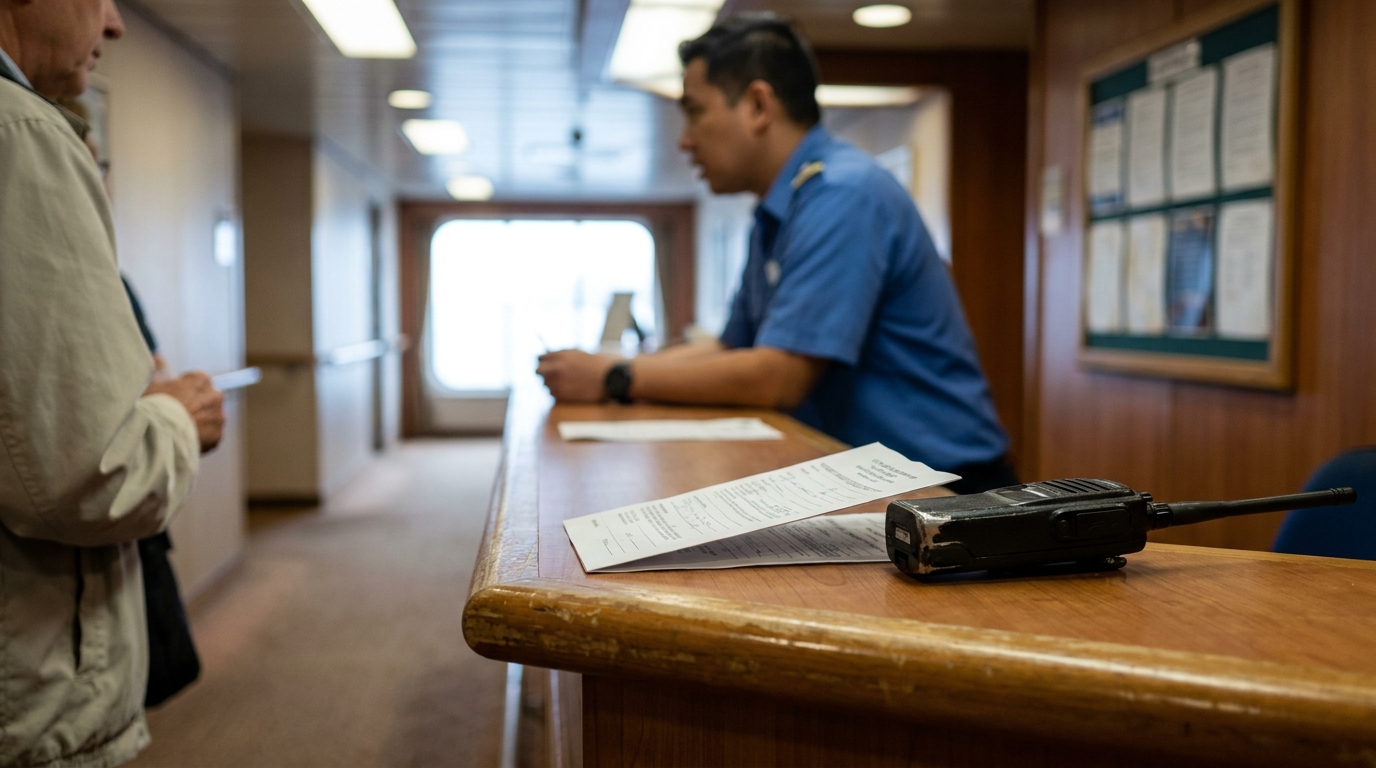
- Report the fall to ship personnel and request a written incident report with a copy.
- Seek onboard medical care promptly and keep all records.
- Collect names and contact details for witnesses before they disembark.
- Note the water source, lighting, and whether warning signs were present.
- Keep your cruise ticket contract, boarding documents, and booking confirmation.
Florida law also helps level the field when crew members create hazards. Florida Statute § 769.02 reflects burden-shifting principles where, in certain employer and common carrier contexts, a presumption of negligence can run against an employer once injury from its agents’ negligence is shown. Its direct application to cruise passenger claims is limited since shipboard injuries are governed by federal maritime law, but the principle illustrates how burden-shifting can weaken blanket liability denials by pressing the cruise line to prove its crew acted with due diligence.
💡 Pro Tip: Save the exact wording of any warning sign you saw. A vague or poorly placed sign can support an argument that the cruise line failed to give adequate notice of a slip and fall cruise deck hazard.
Deadlines That Can Make or Break Your Case
Cruise ship cases involve some of personal injury law’s shortest deadlines, and missing one can end an otherwise strong claim. Cruise ticket contracts often shorten the time far below standard Florida limitations periods, so reading fine print early is essential. Courts generally enforce these contractual deadlines when reasonable and clearly disclosed.
Cruise ticket packages commonly require notice of claim within six months and suit filing within one year. These contractual limits, tied to 46 U.S. Code § 30526, are typically far shorter than Florida’s general deadlines. By comparison, Florida Statute § 95.11(5)(a) allows two years for negligence actions, and § 95.11(2)(b) allows up to five years for written contract actions, though ticket terms often control.
| Type of Deadline | Typical Time Limit | Source |
|---|---|---|
| Cruise ticket notice of claim | 6 months | 46 U.S. Code § 30526 |
| Cruise ticket suit deadline | 1 year | 46 U.S. Code § 30526 |
| Florida negligence action | 2 years | Fla. Stat. § 95.11(5)(a) |
| Action on a written contract | Up to 5 years | Fla. Stat. § 95.11(2)(b) |
Tolling or discovery exceptions may extend deadlines in limited circumstances, but courts interpret these narrowly. Don’t assume any extension applies automatically. When in doubt, treat the earliest possible deadline as controlling.
Legal Tools That Hold Cruise Lines Accountable
Florida provides enforcement tools that make it harder for carriers to simply deny liability and walk away. These tools matter because many cruise lines are headquartered in Florida and their tickets frequently require lawsuits in Florida federal court, even when passengers live elsewhere. That concentration makes Florida central for maritime negligence cruise ship disputes.
Federal law bars cruise lines from completely waiving liability for their own negligence. Under 46 U.S. Code § 30527, vessels transporting passengers between ports in the United States, or between a U.S. port and a foreign port, may not contractually disclaim liability for personal injury or death caused by the vessel owner or their employees’ negligence, and any such provision is void, setting a floor on passenger protections. In tragic cases, Florida Statute § 768.19 may supply wrongful death rights for deaths within state territorial waters, though federal law such as the Death on the High Seas Act can govern and preempt state claims for deaths occurring more than three nautical miles offshore. For deeper discussion of responsibility near South Florida, see our analysis of who is liable for cruise ship injuries at Port Everglades.
Florida even allows injured passengers to pursue the ship itself. Under Florida Statute § 76.32, in actions for injury from negligence in vessel navigation, direction, or management within state territorial jurisdiction, a plaintiff may be entitled to attachment against the vessel. This remedy can be meaningful given how many lines operate from ports near Hollywood, Florida. Read the controlling text in Florida’s vessel attachment statutes.
Frequently Asked Questions
1. Can a cruise line really deny my claim just because I saw a warning sign?
A warning sign does not automatically defeat your claim. Under Florida’s comparative fault rule in § 768.81(6), a sign may reduce recovery only if it shifts fault to you, and you can still recover if you are 50 percent or less at fault. Whether a sign was adequate is generally a fact question.
2. What is constructive knowledge in a wet deck case?
Constructive knowledge means the cruise line should have known about the hazard. Florida Statute § 768.0755 allows this to be shown through evidence the wet condition lasted long enough to be discovered or recurred so regularly it was foreseeable.
3. How long do I have to file a cruise injury lawsuit?
Your deadline is often much shorter than expected. Many tickets require six-month notice of claim and one-year filing deadline under 46 U.S. Code § 30526, even though Florida negligence claims otherwise allow two years under § 95.11(5)(a). Acting quickly preserves every option.
4. Does maritime law favor the cruise line?
Maritime law often reflects older, industry-oriented principles rather than modern consumer protections. However, statutes like 46 U.S. Code § 30527 and Florida’s premises and vessel laws still provide meaningful protections for injured passengers.
5. What should I do first after a wet deck fall?
Report the incident, get medical care, and document everything. A written incident report, photographs, witness information, and medical records help counter cruise line liability denials. Preserving evidence early is one of the most valuable steps.
Protecting Your Rights After a Slip at Sea
A cruise line can deny liability for a wet deck fall, but Florida and maritime law give injured passengers real ground to stand on. Between comparative fault rules, constructive knowledge standards, burden-shifting principles, and vessel attachment remedies, denial is often the conversation’s beginning rather than the end. The outcome depends on facts preserved, evidence gathered, and deadlines met, so prompt action serves passengers best.
If a wet deck fall left you injured after a cruise from the Hollywood, Florida area, the cruise ship accident attorneys at Salpeter Gitkin, LLP are ready to review your situation. Call (954) 467-8622 today or send us a message through our online case review request to take the next step toward protecting your cruise injury compensation in Florida.