Understanding Your Rights After a Fall at a Tallahassee Walmart
Key Takeaways: Determining who is liable for a slip and fall at a Tallahassee Walmart usually hinges on whether the store had actual or constructive knowledge of a dangerous condition and failed to fix it, since Florida law (Fla. Stat. §768.0755) places the burden of proof on the injured shopper. Constructive knowledge can be shown two ways: by proving the hazard existed long enough to be discovered or that such spills occurred with regularity. Liability is not always limited to Walmart, as a maintenance contractor or other negligent party may share fault, with each responsible only for its own percentage. Walmart still owes customers, treated as invitees, a common-law duty to maintain reasonably safe premises. Florida’s modified comparative negligence rule reduces your damages by your share of fault and bars recovery entirely if you are more than 50 percent at fault. Acting quickly to preserve evidence, document the hazard, and meet filing deadlines is essential to protecting your claim.
A fall on a slick floor at a busy Walmart can leave you with serious injuries and a pressing question about who must pay for them. In most cases, the store may be held responsible if it knew or should have known about a dangerous condition and failed to fix it. Under Florida law, if a person slips and falls on a transitory foreign substance in a business establishment, the injured person must prove that the business establishment had actual or constructive knowledge of the dangerous condition and should have taken action to remedy it. That single requirement shapes nearly every Tallahassee Walmart injury case.
If you were injured at Walmart Florida and are unsure where to turn, the team at Salpeter Gitkin, LLP is ready to listen. You can call us at (866) 203-2911 or reach out through our secure contact form to discuss what happened and what your options may be.
What Florida Law Requires You to Prove
Florida places the burden of proof squarely on the injured shopper, not the store. This means that to hold a Tallahassee Walmart liable, you generally must show the store had actual or constructive knowledge of the hazard and failed to remedy it. The controlling rule appears in Fla. Stat. §768.0755(1), and you can review the broader negligence framework within Florida’s premises liability statutes.
This statute was enacted in 2010 and changed how these cases are litigated. Section 768.0755 replaced the earlier §768.0710 and shifted the evidentiary burden onto plaintiffs, which is important historical context for anyone pursuing a claim today. Because of that shift, documenting the condition that caused your fall matters more than many people realize.
💡 Pro Tip: If you fall, ask a store employee to create an incident report before you leave, and request a copy. A contemporaneous record can become powerful evidence later.
How Constructive Knowledge Opens Two Paths to Liability
Constructive knowledge, meaning what a store should have known, can be established with circumstantial evidence. This gives plaintiffs two distinct pathways to prove liability rather than just one. Under Fla. Stat. §768.0755(1)(a)-(b), constructive knowledge may be proven by showing the dangerous condition existed long enough that the business should have known of it through ordinary care, or that the condition occurred with regularity and was therefore foreseeable.
When a Hazard Existed Too Long
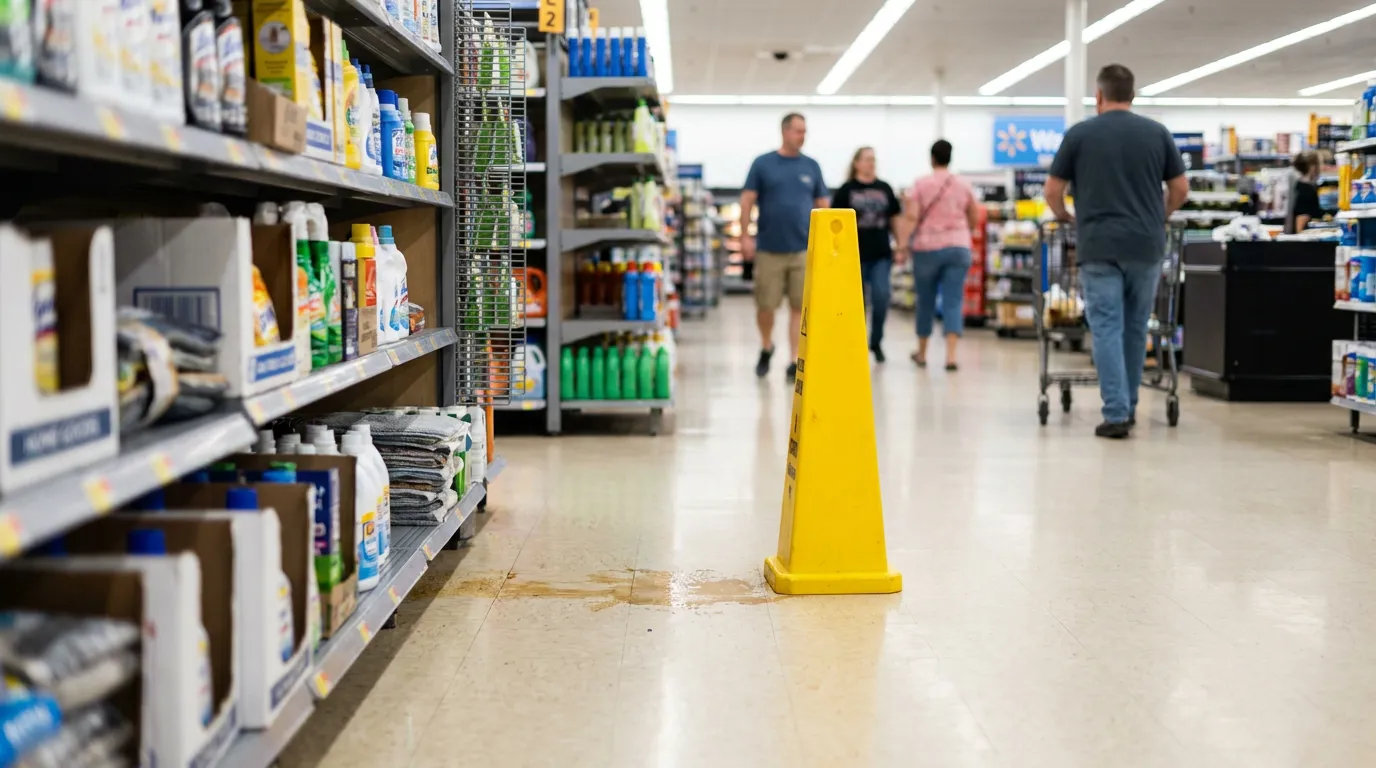
Time is often the deciding factor in a transitory-substance case. If a liquid spill sat on a Walmart floor for an extended period before your fall, Florida law may allow you to argue the store should have discovered and cleaned it. Tracks through a puddle, dried edges, or footprints can all suggest the substance was present long enough that reasonable inspection would have caught it.
When Spills Happen Regularly
A recurring hazard can also support a claim even without proof of how long a specific spill lasted. If spills in a particular aisle are a known and repeated problem, that pattern may make the danger foreseeable under the statute. This second pathway gives a Walmart slip and fall Tallahassee claimant a route to liability even when no eyewitness saw the spill occur.
Proving either pathway is fact-intensive and rarely automatic. Courts examine the specific circumstances, and outcomes depend heavily on the available evidence. For a deeper look at building this kind of proof, our guide on how to prove a Walmart knew about a hazard walks through the evidence that often matters most.
💡 Pro Tip: Photograph the hazard from multiple angles immediately, before any employee cleans it up. Images of the substance, surrounding area, and any missing warning signs can be difficult to recreate later.
Who Can Be Held Liable When You Are Injured at Walmart Florida
Liability is not always limited to Walmart alone. Depending on the facts, responsibility might extend to a maintenance contractor or another party whose negligence contributed to the unsafe condition. Florida has abolished joint-and-several liability in negligence actions, so under Fla. Stat. §768.81(3), each liable party is responsible only for its own percentage share of fault rather than the full judgment.
The store’s responsibilities also go beyond the transitory-substance rule. Florida’s premises liability statute does not eliminate Walmart’s existing common-law duty of care. As Fla. Stat. §768.0755(2) states, the section does not affect any common-law duty of care owed by a person or entity in possession or control of a business premises. That means Walmart may still owe lawful visitors a general duty to maintain a reasonably safe shopping environment.
Walmart’s Duty of Care to Shoppers
Customers are generally treated as invitees, the category owed the highest level of care under Florida premises liability law. Walmart is expected to inspect its premises and address or warn of dangers it reasonably should discover. When that duty is breached and the breach causes injury, a store liability Tallahassee Florida claim may follow, though every case turns on its own facts.
To understand how these duties apply to your situation, it can help to speak with a premises liability Tallahassee Florida team that handles these matters regularly.
How Comparative Fault Affects Your Recovery
Florida applies a modified comparative negligence standard to slip-and-fall claims. This means your damages are reduced by your own percentage of fault, but you may be barred entirely from recovery if found more than 50 percent responsible. Under Fla. Stat. §768.81(6), any party found to be greater than 50 percent at fault for his or her own harm may not recover any damages.
Being partly at fault does not automatically end your claim. Under Fla. Stat. §768.81(2), contributory fault diminishes proportionately the amount awarded as economic and noneconomic damages but does not bar recovery, subject to the over-50-percent rule. A standard slip-and-fall negligence claim qualifies as a negligence action under Fla. Stat. §768.81(1)(c), so these apportionment rules apply. You can review the apportionment language in the Florida comparative fault statute for the full text.
| Your Share of Fault | Effect on Recovery |
|---|---|
| 0% | Full damages, subject to proof |
| 1% to 50% | Damages reduced by your percentage |
| More than 50% | No recovery permitted |
💡 Pro Tip: Comparative fault is often the defense a store raises first. Preserving evidence that shows the store created or ignored the hazard can reduce the percentage of blame shifted onto you.
Practical Steps to Protect a Tallahassee Walmart Injury Claim
The actions you take in the hours and days after a fall can shape the strength of your case. Because the burden of proof rests on you, preserving evidence early is one of the most valuable things you can do. The following steps generally help injured shoppers protect their rights:
- Seek prompt medical care and keep all records and bills.
- Report the incident to a store manager and request the report number.
- Photograph the hazard, your injuries, and the surrounding area.
- Collect names and contact information from any witnesses.
- Avoid giving recorded statements to an insurer before consulting a lawyer.
Keep in mind that civil deadlines are separate from any internal store process. Florida sets time limits for filing personal injury lawsuits, and courts generally interpret exceptions such as tolling narrowly and only in limited circumstances. Because these deadlines are not automatic or guaranteed to extend, acting promptly helps protect your ability to pursue a Tallahassee Florida injury claim.
💡 Pro Tip: Do not assume an incident report alone preserves your claim. Independent evidence, like your own photos and witness contacts, often carries more weight in a dispute.
Frequently Asked Questions
-
What do I have to prove to win a slip and fall case against Walmart?
You generally must prove Walmart had actual or constructive knowledge of the hazard and failed to remedy it. Under Fla. Stat. §768.0755(1), the injured shopper carries this burden, which can be met with direct or circumstantial evidence depending on the facts.
-
Can I still recover if I was partly to blame for my fall?
In many cases, yes, though your damages may be reduced. Fla. Stat. §768.81(2) reduces recovery in proportion to your fault, but Fla. Stat. §768.81(6) bars recovery entirely if you are found more than 50 percent at fault.
-
Is Walmart the only party that can be held responsible?
Not necessarily. A maintenance contractor or other negligent party may share responsibility, and under Fla. Stat. §768.81(3), each party pays only its own percentage of fault rather than the full judgment.
-
What is constructive knowledge in a Walmart floor hazard case?
It is what the store should have known through ordinary care. Under Fla. Stat. §768.0755(1)(a)-(b), it can be shown if the hazard existed long enough to be discovered or if the condition occurred with regularity and was foreseeable.
-
Does the statute remove Walmart’s other duties to customers?
No. Fla. Stat. §768.0755(2) confirms the statute does not affect any common-law duty of care, so Walmart may owe additional duties to lawful visitors beyond the transitory-substance rule.
Moving Forward After a Walmart Slip and Fall
Determining who is liable for a fall at a Tallahassee Walmart depends on proving knowledge of the hazard, the store’s duty of care, and how comparative fault may apply. Florida law gives injured shoppers real pathways to recovery through both the length-of-time and regularity standards, while the modified comparative negligence rule shapes how much you may ultimately recover. Because every outcome turns on specific facts and preserved evidence, careful documentation and timely action remain essential for anyone who has been injured at Walmart Florida.
If you have questions about a Walmart slip and fall Tallahassee claim, the attorneys at Salpeter Gitkin, LLP are here to help you understand your options. Call us today at (866) 203-2911 or send a message through our online case review request to take the next step toward protecting your rights.