Escalator Falls, Maintenance Contracts, and Who Pays for Your Injuries
Key Takeaways: Yes, you can often sue an escalator maintenance company after a fall in Florida if its negligence helped cause your injuries, such as skipped maintenance, poor repairs, or ignored defects. Florida regulates escalator contractors under Chapter 399, which requires registration, liability insurance, and yearly inspections. Florida has also adopted the ASME A17.1 safety code, which can help define the standard of care. To win, you must prove duty, breach, causation, and damages. Property owners may share responsibility with contractors. Save photos, witness information, and video quickly. Under Florida’s modified comparative fault rule, you generally cannot recover if you are found more than 50 percent at fault. Most negligence claims that arose after March 24, 2023 must be filed within two years under Fla. Stat. § 95.11.
Yes, in many cases you can sue an escalator maintenance company after a fall in Florida, but only if the company’s negligence helped cause your injuries. Property owners often hire outside contractors to inspect, repair, and service their escalators. If a contractor skipped required work, made poor repairs, or ignored a known defect, Florida law may allow a claim against the contractor as well as the property owner. Whether you have a valid claim depends on the facts, the contract terms, the evidence you can gather, and Florida’s deadlines.
If you or a loved one was hurt on an escalator in Hollywood, Fort Lauderdale, or anywhere in South Florida, you do not have to sort out these questions alone. The legal team at Salpeter Gitkin, LLP can review what happened and explain your options. Call (954) 467-8622 or contact us now to discuss your case.
Why Escalator Accidents Happen More Often Than People Think
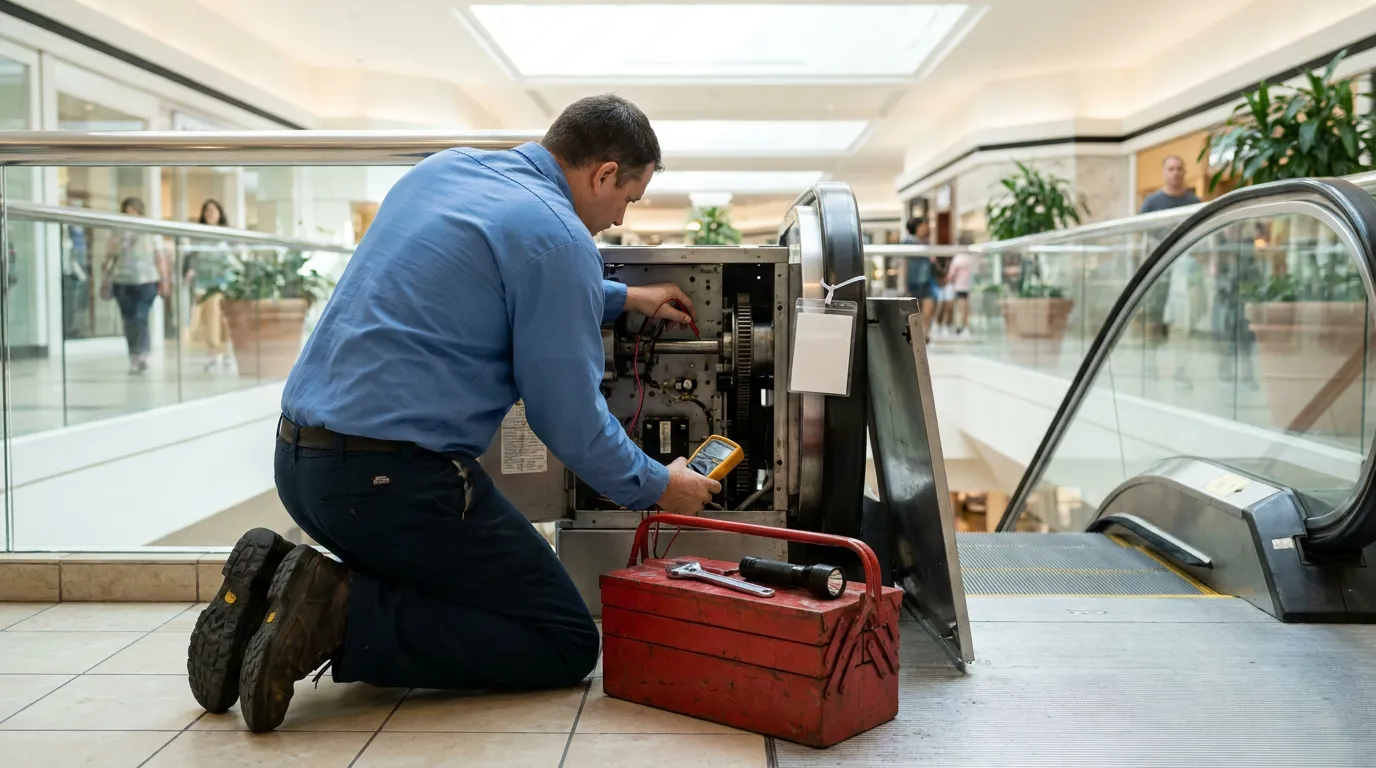
Escalators are moving machines, and when they are poorly maintained, they can cause serious harm. Medical research has found that most escalator injuries come from falls, limbs or clothing getting caught, and mechanical failures. Children and older adults appear to face a higher risk. That matters legally because it can help show the danger was foreseeable.
Common mechanical causes of escalator falls include:
- Sudden stops or abrupt changes in speed
- Handrails that move faster or slower than the steps
- Broken, loose, or missing step treads and comb plates
- Gaps along the side panels that can trap shoes, fingers, or clothing
- Brakes or safety switches that fail
Each of these hazards may point to a maintenance problem rather than bad luck. When a defect develops over time, a maintenance contractor may have had the chance to find and fix it. That is often where a claim against the contractor begins.
How Florida Law Regulates Escalator Maintenance Companies
Florida closely regulates the companies that work on escalators, and those rules can help show what a reasonable contractor should have done. Under Florida’s elevator safety statutes, escalators are regulated as "vertical conveyances," along with elevators and similar equipment. These rules do not automatically give you a right to sue, but courts may consider them when deciding whether a company met the standard of care.
Registered Elevator Companies and Insurance Requirements
Fla. Stat. § 399.01 defines a "registered elevator company" as a business registered with the state and authorized to build, install, inspect, maintain, or repair vertical conveyances. These companies must renew their registration and carry general liability insurance in the minimum amounts set by rule. This often means a negligent maintenance company has insurance that may pay a valid claim, though policy limits and exclusions can affect how much is available.
What a Service Maintenance Contract Covers
Under Fla. Stat. § 399.01, a "service maintenance contract" covers routine examination, lubrication, cleaning, adjustment, replacement of parts, required safety tests, and other service needed to keep the equipment running safely. In a lawsuit, this definition can help show what work the contractor was expected to do. The actual contract terms still matter, because they may expand or limit the contractor’s duties.
Industry Safety Codes as the Standard of Care
Florida has adopted the national ASME A17.1 Safety Code for Elevators and Escalators through Chapter 399 and the Florida Building Code. Your attorney may compare a contractor’s work against these codes to argue that it fell below industry standards. Code violations are generally evidence of negligence, but they do not prove liability on their own.
Proving Contractor Negligence in a Florida Escalator Accident
To hold a maintenance company responsible, you generally must prove four elements: duty, breach, causation, and damages. The contractor’s duty to riders often comes from the work it agreed to do for the property owner and from Florida’s safety rules.
Breach is where the details matter most. Negligent repair might include faulty part replacements, skipped safety tests, ignored warning signs, or work that did not meet code. Under Fla. Stat. § 399.03, the state generally may issue permits to install or alter conveyances only to registered elevator companies, and the work must meet the applicable codes.
Causation means linking the contractor’s failure to your injury. This step often requires engineering analysis, maintenance logs, and medical records. Depending on the facts, your damages may include medical bills, lost wages, and pain and suffering.
Property Owners May Share Responsibility
Hiring a contractor does not always protect a property owner from liability. Under Florida premises liability law, businesses generally must keep their property reasonably safe for customers and warn of dangers they know about or should know about. You can learn more about when Hollywood business owners are liable for customer falls. In many escalator cases, a court may find the owner and the contractor both partly at fault.
Florida also follows a modified comparative fault rule under Fla. Stat. § 768.81. If you are found more than 50 percent at fault, you cannot recover damages. If you are 50 percent or less at fault, your damages are reduced by your share of fault. Defendants often argue that riders were distracted or careless, so strong evidence is important.
The Paper Trail: Records That Can Strengthen Your Claim
Florida’s inspection and filing rules often create documents that can serve as useful evidence. Under Fla. Stat. § 399.061, a certified elevator inspector generally must inspect each conveyance every year, and the owner must file a statement with the state at least once a year confirming the maintenance contract.
| Record Type | Legal Source | Why It May Matter |
|---|---|---|
| Annual inspection reports | Fla. Stat. § 399.061(1) | May reveal past defects or code violations |
| Maintenance contract filings | Fla. Stat. § 399.061(1)(b) | May show who was responsible for upkeep |
| Correction or shutdown orders | Fla. Stat. § 399.061(3)-(4) | May show the state flagged unsafe conditions |
| Written explanations of inspection procedures | Fla. Stat. § 399.061(5) | May expose errors or gaps in inspections |
| Permits for alterations | Fla. Stat. § 399.03 | May show whether repair work was authorized |
If the state finds errors, missed violations, or skipped tests in an inspection report, it may require the inspector or company to explain its methods in writing. The state may also seal unsafe equipment or order it shut down until repaired. These processes are separate from a lawsuit, but the records they create can still be useful evidence.
💡 Pro Tip: Ask witnesses whether the escalator jerked, stopped, or made strange noises before your fall. Details written down early can help an engineer later find a mechanical cause.
Steps to Take After an Escalator Injury in Hollywood
What you do in the days after a fall can strongly affect your ability to recover compensation. Escalator evidence can disappear quickly because crews may repair the equipment within hours. If you are able, take these steps:
- Get medical care right away and follow your treatment plan
- Photograph the escalator, the steps, the handrails, and your injuries
- Report the incident to the property manager and ask for a copy of the report
- Get the names and phone numbers of witnesses
- Keep your shoes and clothing as they were
💡 Pro Tip: Your attorney may send a letter asking the property owner and contractor to keep surveillance video and maintenance records. Video is often recorded over within days, so act early.
An attorney who handles premises liability cases can also identify every party who may be responsible. Escalator cases often involve owners, contractors, and sometimes manufacturers. Speaking with an escalator injury lawyer can help you understand which claims may apply to you.
Florida’s Filing Deadline Is Shorter Than Many Expect
Under Fla. Stat. § 95.11, Florida’s statute of limitations for negligence is generally two years for claims arising on or after March 24, 2023. Earlier claims generally had a four-year deadline. If you miss the deadline, you may lose your claim for good. Exceptions are limited and courts read them narrowly.
Claims involving government property, such as some public transit stations, may have separate rules under Fla. Stat. § 768.28. These include written notice before you sue, generally within three years, and caps on damages. Getting advice early can help you avoid mistakes.
Frequently Asked Questions
1. Can I sue both the property owner and the escalator maintenance company?
Yes, in some cases. If both parties helped create the unsafe condition, you may be able to bring claims against each. Fault is generally divided among the parties, and each defendant usually pays only its own share.
2. Do I need proof that the escalator malfunctioned?
Generally, you must show that a defect or maintenance failure caused your fall. Inspection reports, maintenance logs, video, and engineering analysis can help prove this link.
3. What if I was partly at fault for my fall?
Under Fla. Stat. § 768.81, your recovery may be reduced by your percentage of fault. If you are found more than 50 percent at fault, you cannot recover.
4. How long do I have to file an escalator injury lawsuit in Florida?
For most negligence claims arising on or after March 24, 2023, you have two years under Fla. Stat. § 95.11. Claims against government entities have extra notice rules, so act promptly.
5. Does a state inspection violation automatically prove negligence?
No. A violation may serve as evidence of negligence, but you generally still must prove that it caused your injuries.
Holding Negligent Contractors Accountable in South Florida
Escalator maintenance companies in Florida work under detailed state rules, and those rules may help injured people prove negligence. Success depends on strong evidence, a careful review of fault, and filing on time.
If an escalator fall has disrupted your life, the attorneys at Salpeter Gitkin, LLP are ready to listen and help you take the next step. Call (954) 467-8622 or schedule your consultation today to learn more about your rights.
Disclaimer: This content is for informational purposes only and is not legal advice. Every case is unique, and results may vary. Consult an attorney about your specific circumstances.