How Insurers Push Fault Onto Injured Visitors in Hollywood
Key Takeaways: After a trip and fall in Hollywood, FL, property insurers often try to cut what they pay by blaming you. Under Florida’s comparative negligence law, Fla. Stat. § 768.81, your damages are reduced by your share of fault. In most negligence cases filed after March 24, 2023, you also cannot recover anything if you are found more than 50 percent at fault. Five common tactics: claiming the hazard was obvious, disputing that the business knew about it, blaming your shoes, phone, or walking pace, pointing to your age or health, and arguing the property met code or that someone else is responsible. For spills and other transitory substances, Fla. Stat. § 768.0755 requires you to prove the business had actual or constructive knowledge of the hazard, making surveillance footage and cleaning logs especially important. Photos, witness information, incident reports, prompt medical records, and requests to preserve footage can help push back against these fault arguments. Be careful with recorded statements and broad medical releases, since insurers can use them against you. Most negligence claims accrued after March 24, 2023 have a two-year filing deadline. Claims against government entities have separate pre-suit notice requirements and deadlines. Settlement talks generally do not pause the clock.
After a trip and fall in Hollywood, FL, the property owner’s insurer will usually try to reduce what it pays by moving blame onto you. The adjuster’s job is generally to protect the insurance company, and one way to do that is arguing you caused or contributed to your own injuries. Under Florida’s comparative negligence rules, every percentage point of fault assigned to you lowers your recovery. If your share goes past 50 percent, you may not recover anything at all. This article covers five common forms of insurer blame shifting, the Florida laws behind them, and practical steps that may help protect your claim.
If an adjuster is already questioning your version of events, speaking with a lawyer early may help you avoid statements that could be used against you. The premises liability team at Salpeter Gitkin, LLP works with injured visitors, customers, and employees throughout South Florida. Call 954-467-8622 or contact us now to talk about your situation.
Comparative Negligence in Trip and Fall Florida Cases: The Rule Insurers Rely On
Florida’s comparative negligence system decides how much money an injured person can recover when more than one party shares fault. It is codified in Florida Statutes § 768.81. Fla. Stat. § 768.81(6), added by 2023 tort reform legislation, generally applies to negligence actions filed after March 24, 2023. Under it, a party found more than 50 percent at fault for their own harm may not recover any damages. That subsection does not apply to medical negligence actions. If you are 50 percent or less at fault, your damages are reduced proportionally.
That threshold explains why comparative negligence trip and fall Florida disputes can become so contentious. If you are assigned 30 percent of the fault, your recovery is generally reduced by 30 percent. At 51 percent, it could be eliminated. Adjusters understand this math well, and many of their tactics are designed to move your share of fault closer to or past that line.
| Fault Assigned to You | General Effect on Recovery Under Fla. Stat. § 768.81 |
|---|---|
| 0% | Full damages, if liability and damages are proven |
| 1%, 50% | Damages reduced by your percentage of fault |
| More than 50% | Generally barred from recovering damages (except in medical negligence cases) |
Five Blame-Shifting Tactics Adjusters Commonly Use
The strategies below are among the most common insurance adjuster tactics in Hollywood premises cases. Recognizing them may help you respond carefully and keep the evidence you need.
1. Claiming You Should Have Seen the Hazard
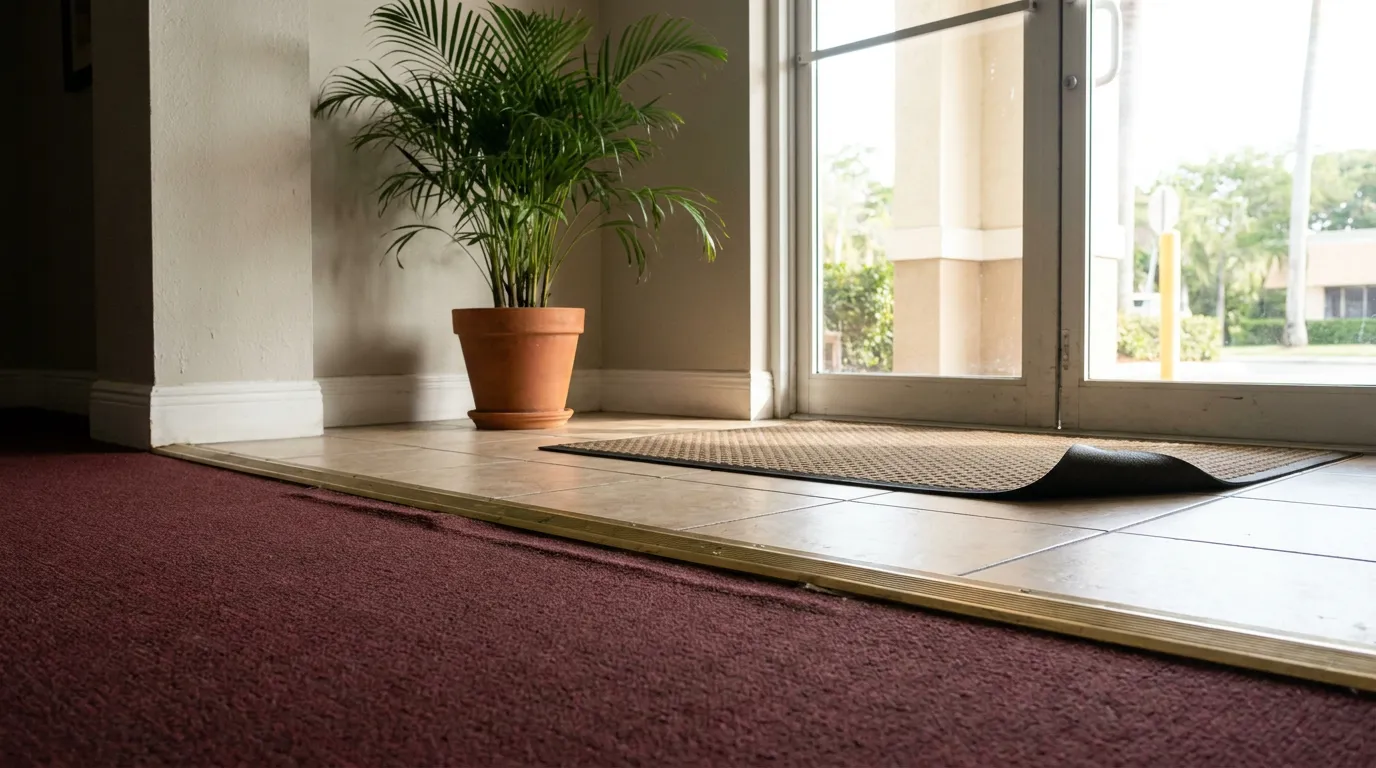
Many insurers argue that a cracked walkway, uneven threshold, or stray object was so obvious that any careful person would have avoided it. The goal is to make your own attention the main cause of the fall. In Florida, an open and obvious condition may relieve an owner of the duty to warn, but generally does not relieve the separate duty to keep premises reasonably safe, though it may affect how fault is divided. Lighting, distractions, crowds, and product displays can all affect whether a hazard was actually noticeable. Learn more in our discussion of whether the open and obvious defense applies in Hollywood cases.
2. Disputing That the Business Knew About the Hazard
If you fell on a transitory foreign substance in a business, such as a spilled drink in a store, Fla. Stat. § 768.0755(1) places a specific burden on you. You must prove the business had actual or constructive knowledge of the dangerous condition and should have fixed it. Under § 768.0755(1)(a), (b), constructive knowledge may be shown with circumstantial evidence, such as the condition existing long enough that ordinary care should have found it, or that similar incidents happened regularly.
Insurers frequently argue neither condition is met, claiming the spill occurred moments before you fell, or that nothing like it had happened before. Evidence such as footprints or cart tracks in the substance, dried edges, surveillance footage, and cleaning logs may help show how long the hazard was there. This statute applies only to transitory substances in business establishments. Other trip hazards, such as broken pavement or uneven flooring, are generally analyzed under ordinary premises liability negligence principles, which still often involve questions about what the owner knew or should have known.
3. Blaming Your Shoes, Your Phone, or Your Pace
Adjusters often ask detailed questions about what you were wearing, whether you were looking at your phone, and how fast you were walking. Every answer can become a reason to assign you shared fault. Flip-flops, carrying bags, or glancing at a text does not automatically make you responsible for a fall caused by a dangerous condition, but these details can influence how fault is divided. Answering briefly and accurately, without speculating, is generally the safer approach.
4. Pointing to Your Age or Health Conditions
Older adults are particularly likely to hear that their fall was caused by their own health, not the property. CDC fall prevention guidance identifies falls as a leading cause of injury among older adults and lists vision problems among the risk factors. Insurers sometimes use this data to argue that balance issues, medications, or poor eyesight caused the fall. A pre-existing condition, however, generally does not erase a property owner’s duty to fix hazards. Florida law generally allows you to recover for the worsening of an existing condition caused by the defendant’s negligence, but not for the condition itself. Medical records documenting your condition before and after the fall can help clarify what the incident actually caused.
5. Arguing the Property Met Code or That Someone Else Is Responsible
Some insurers claim that a step or walkway complied with local rules, or that a contractor, tenant, or the City bears responsibility instead. The City of Hollywood’s Code of Ordinances sets property maintenance and safety standards owners are expected to follow. In Florida, violating a municipal ordinance is generally evidence of negligence, not negligence per se. Complying with code, on the other hand, does not necessarily prove the owner acted reasonably. Under § 768.81, fault may also be apportioned among multiple defendants and, in some cases, non-parties the defense properly identifies. That can make it important to identify every party who owned, controlled, or maintained the property.
Claims involving government-owned property may involve separate pre-suit notice requirements under Fla. Stat. § 768.28. These rules generally require written notice to the proper agency, and in many cases to the Florida Department of Financial Services, within a set time, with the agency given a chance to respond before you can file suit. These notice deadlines are separate from the statute of limitations, and missing them may bar the claim.
Evidence That May Counter Blame Shifting
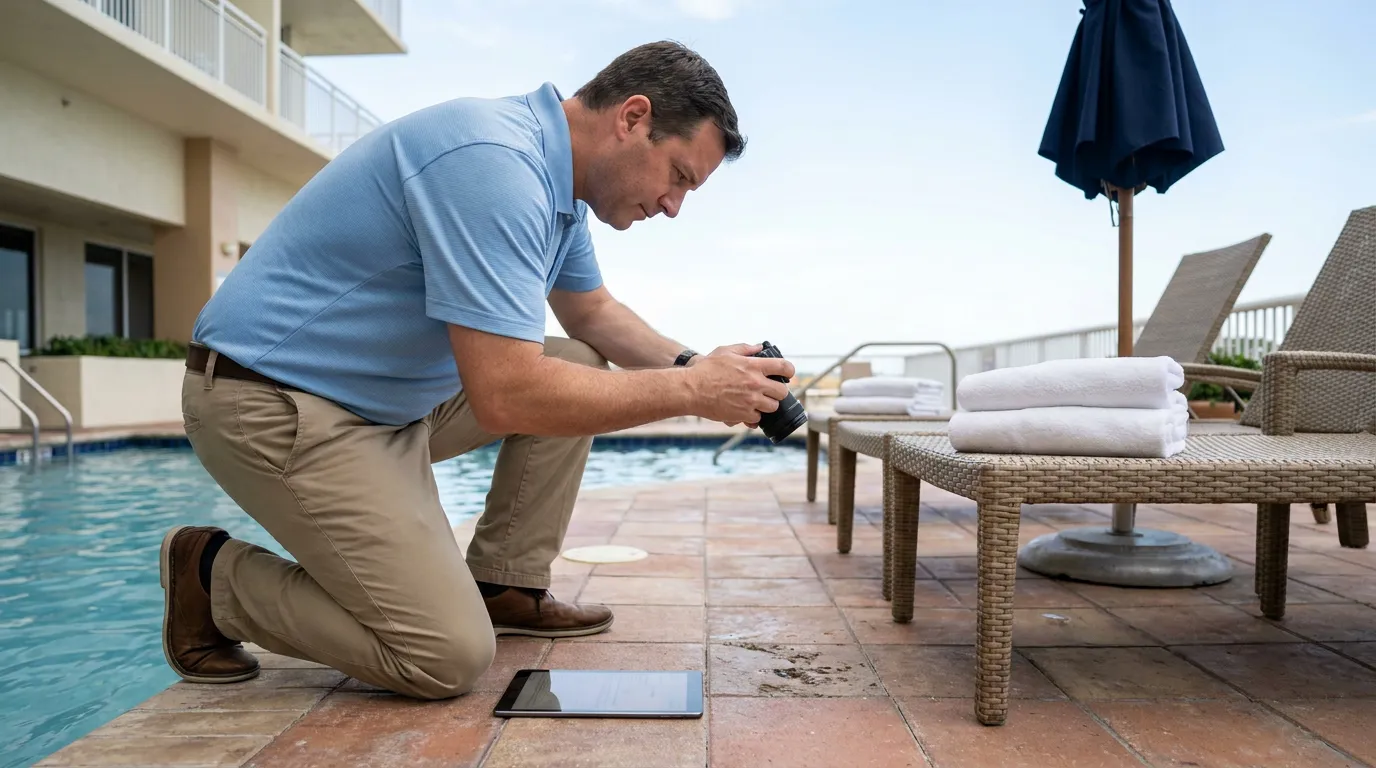
Strong documentation is often your best response to an adjuster’s fault arguments. The more you capture early, the harder it becomes for the insurer to rewrite what happened. Useful evidence may include:
- Photos and video of the hazard, lighting, and surroundings, taken as soon as possible
- Names and contact information of witnesses
- A copy of any incident report made with the business or property manager
- Medical records showing prompt treatment and a clear diagnosis
- The shoes and clothing you wore, kept in their current condition
- Written requests that the owner preserve surveillance footage
💡 Pro Tip: Before agreeing to a recorded statement, keep in mind that you are generally not required to give one to the property owner’s insurer. Consider getting legal guidance first.
Watch Your Filing Deadline Closely
Delays can create another opening for claim denial, so understanding Florida’s deadlines matters. For negligence claims that accrued after March 24, 2023, Fla. Stat. § 95.11(4)(a) generally sets a two-year limitations period. Claims accrued before that date are generally subject to the prior four-year period. Under Fla. Stat. § 95.031(1), a cause of action accrues when its last element occurs, which in a fall case is usually the date of injury. Section 95.031 has limited discovery-based provisions for certain claims, such as fraud and products liability, but these generally do not extend ordinary trip and fall deadlines. Claims against government entities have their own notice and filing deadlines under § 768.28.
Insurers sometimes drag out negotiations until the deadline gets close. Ongoing settlement talks generally do not pause the limitations period. Keeping track of your own timeline may help protect your leverage.
Frequently Asked Questions
1. Can I still recover if I was partly at fault for my fall?
Yes, in many cases. Under Fla. Stat. § 768.81, your damages are reduced by your percentage of fault. In most negligence cases filed after March 24, 2023, you can recover only if you are not found more than 50 percent responsible.
2. Does the property owner insurer decide my fault percentage?
No. An adjuster may propose a fault split during negotiations, but that figure is not binding. If the case goes to trial, a jury or judge generally determines fault based on the evidence.
3. What if I fell on a spill in a store?
Under Fla. Stat. § 768.0755(1), you must prove the business had actual or constructive knowledge of the substance and should have fixed it. Constructive knowledge can be shown with circumstantial evidence, such as how long the substance was there or how often similar spills happened.
4. How long do I have to file a trip and fall lawsuit in Florida?
For most negligence claims accrued after March 24, 2023, the limitations period is generally two years under Fla. Stat. § 95.11(4)(a). Claims against government entities involve separate pre-suit notice requirements and deadlines under Fla. Stat. § 768.28.
5. Should I sign a medical records release from the insurer?
Be cautious. Broad releases can give an insurer access to unrelated medical history, which it may use to argue that a pre-existing condition caused your injuries.
Protecting Your Claim From Unfair Fault Arguments
Insurers commonly shift blame by pointing to obvious hazards, disputing notice, questioning your conduct, highlighting your health, and naming other responsible parties. Florida’s comparative negligence trip and fall rules give these tactics real financial weight, especially near the 50 percent threshold. Prompt evidence, careful communication, and attention to deadlines may help you push back. Every case depends on its specific facts, and no result can be guaranteed.
If an insurer is blaming you for a fall on someone else’s property, you may benefit from talking with a comparative negligence trip and fall Florida lawyer before responding further. Reach out to the team at Salpeter Gitkin, call 954-467-8622, or schedule your consultation today.
Disclaimer: This content is for informational purposes only and is not legal advice. Every case is unique, and results may vary. Consult an attorney about your specific circumstances.